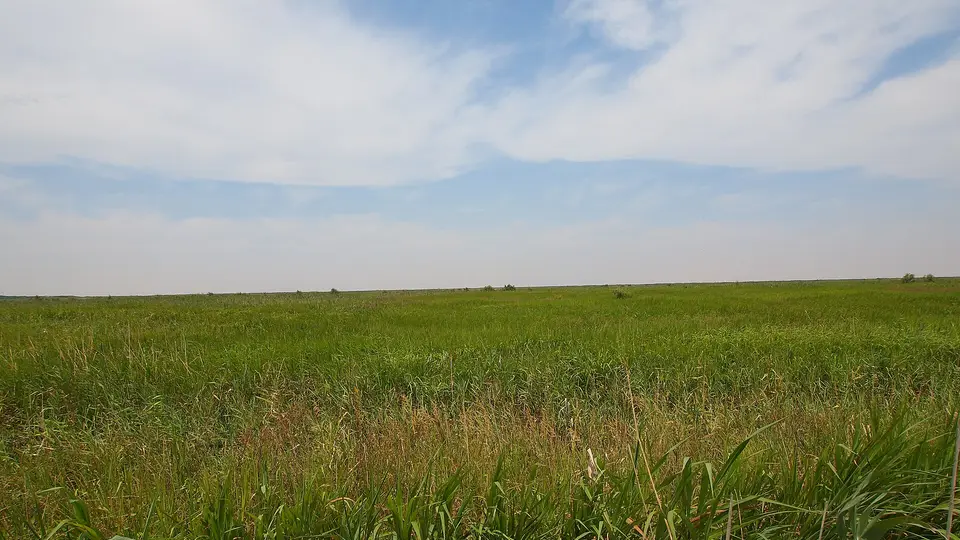
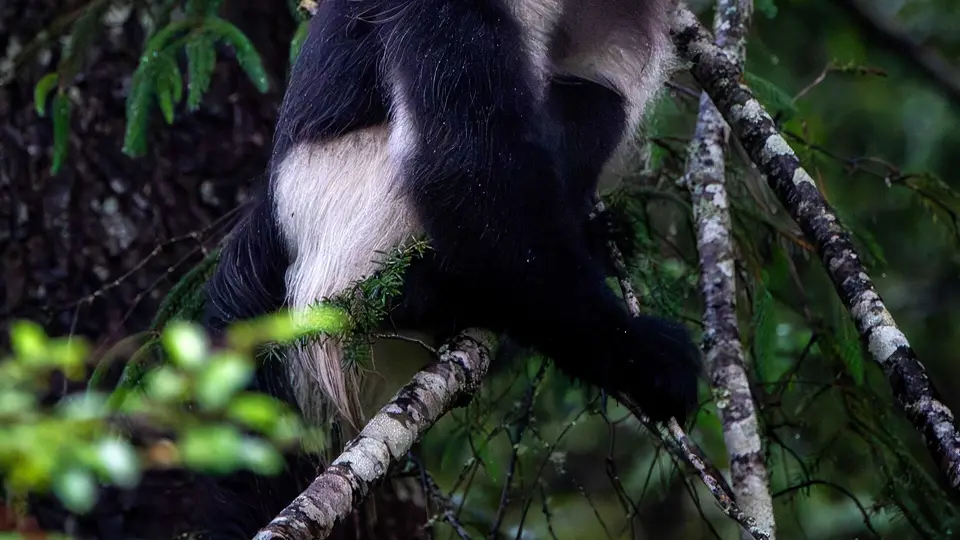
Hainan's rainforest and gibbons in the 2000s volunteer movement
In 2008 volunteers in Haikou set up a centre to defend Hainan's tropical rainforest. What the archive records — and how the island's forests and gibbons have fared since.
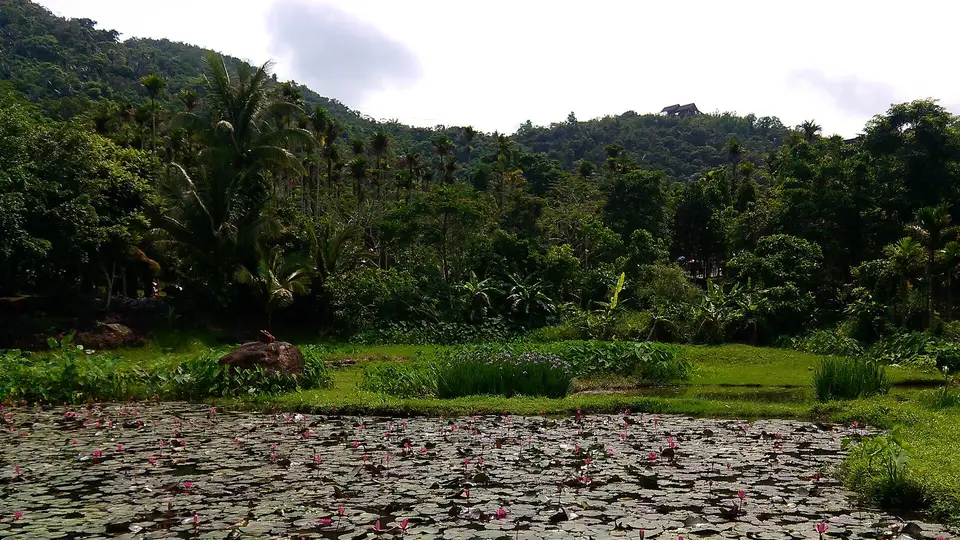
Hainan, China's large tropical island in the South China Sea, holds the country's most extensive tropical rainforests and one of the rarest primates on Earth, the Hainan gibbon (Nomascus hainanus). In the late 2000s, volunteers linked to the Green Eyes network (绿眼睛) set up an environment volunteer centre on the island. This page summarizes what archived copies of this website record about that work, and adds context on what has happened to Hainan's forests and gibbons since. It is an independent summary, not an official account; see the historical archive for background.
What the archive records
A volunteer centre in Haikou (2008)
An archived project page from 2009 describes the Hainan Environment Volunteer Center (海南环境志愿者中心, EVC) as a non-governmental group founded in 2008 by local organizations and individuals interested in environmental protection, with an office in Haikou. Its stated focus was wildlife and nature protection, and in particular Hainan's tropical rainforest.
The page explains the concern behind the project: Hainan has China's richest tropical rainforest, but the expansion of high-value tropical agriculture — plantations — was leading some developers to clear forest for cultivation, and several national nature reserves had been affected to different degrees. It pointed readers to a "Hainan rainforest conservation" blog run by the volunteers.
Newsletters (2009)
The website's download section listed two issues of a Hainan newsletter, the first compiled in June 2009 and the second in September 2009. The files themselves were not preserved in the Internet Archive, so we cannot summarize their contents.
"Protect China's gibbons" events (November 2009)
A November 2009 item describes a series of public events on protecting China's gibbons, launched in Haikou. The listed organizers were the administration of the Bawangling National Nature Reserve, the international conservation charity Fauna & Flora International, and the Hainan volunteer centre, with support from a provincial environmental education centre, Haikou's youth volunteer association, Hainan Normal University and a county education bureau.
Context: Hainan's gibbons and forests today
The world's rarest ape
The Hainan gibbon lives only in the forests of Bawangling, in western Hainan. It is assessed as Critically Endangered on the IUCN Red List and is widely described as one of the rarest primates in the world. By the late 20th century only a single, tiny population survived. Long-term protection, patrols and habitat restoration — work in which Fauna & Flora International and the reserve administration have been involved for many years — have allowed the population to grow slowly, although it still numbers only a few dozen animals. With so few individuals in one area, the species remains extremely vulnerable to disease, storms and loss of genetic diversity.
A national park
In 2021 China formally established the Hainan Tropical Rainforest National Park as one of its first five national parks, bringing the island's main rainforest areas, including Bawangling, under a single protected-area administration. We explain how the national park system works in National parks and protected areas in China.
Why plantations matter
The concern the volunteers raised in 2009 — forest cleared for plantations — is a textbook example of habitat loss and fragmentation, the leading driver of biodiversity decline worldwide. Gibbons depend on a continuous forest canopy to move and feed; restoring connections between forest patches has been a key part of efforts to help the population expand.
Why this history is worth recording
The Hainan records show a pattern that was common in the 2000s: small volunteer groups, often started by students, working alongside nature reserves and international NGOs on public education. Read more in our history of grassroots conservation in China and our overview of biodiversity in China.
References
- Green Eyes website, "热带雨林项目" (Tropical rainforest project), 2009 (Internet Archive copy). http://web.archive.org/web/20130901084745/http://www.greeneyeschina.org/gywm/xm/2009-04-04/65.html
- Green Eyes website, "2009'保护中国长臂猿'主题活动", 27 November 2009 (Internet Archive copy). http://web.archive.org/web/20130901112144/http://www.greeneyeschina.org/hd/2009-11-27/216.html
- IUCN Red List of Threatened Species, Nomascus hainanus (Hainan gibbon) — search the Red List for the current assessment. https://www.iucnredlist.org/search?query=Nomascus%20hainanus
- Fauna & Flora (formerly Fauna & Flora International), Hainan gibbon conservation. https://www.fauna-flora.org/
- The State Council of the People's Republic of China, announcement of China's first national parks, October 2021. https://english.www.gov.cn/policies/latestreleases/202110/14/content_WS6167f246c6d0df57f98e1a65.html