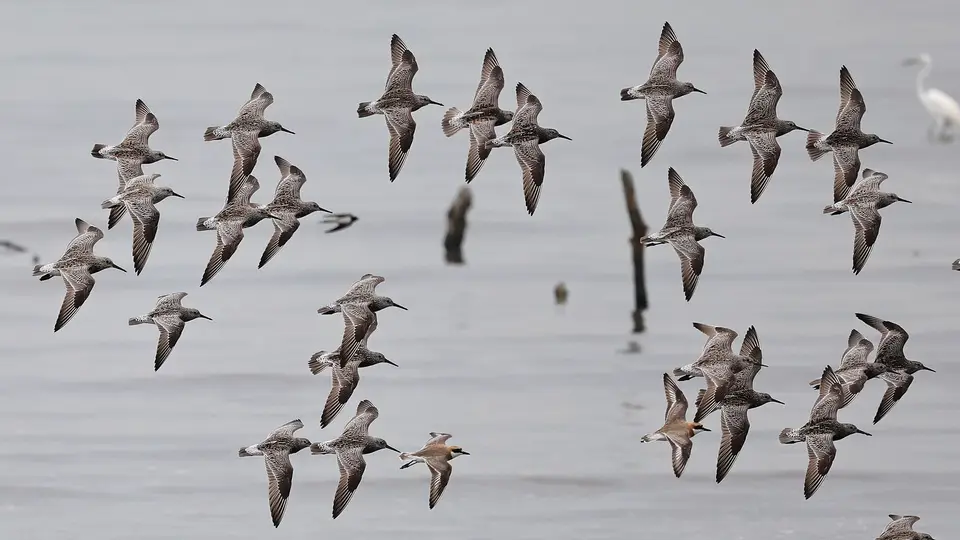
National parks and protected areas in China: nature reserves, red lines and the new park system
China is reorganizing its protected areas around national parks. This guide explains nature reserves, the first five national parks, ecological red lines, the Wetlands Protection Law and the National Park Law.
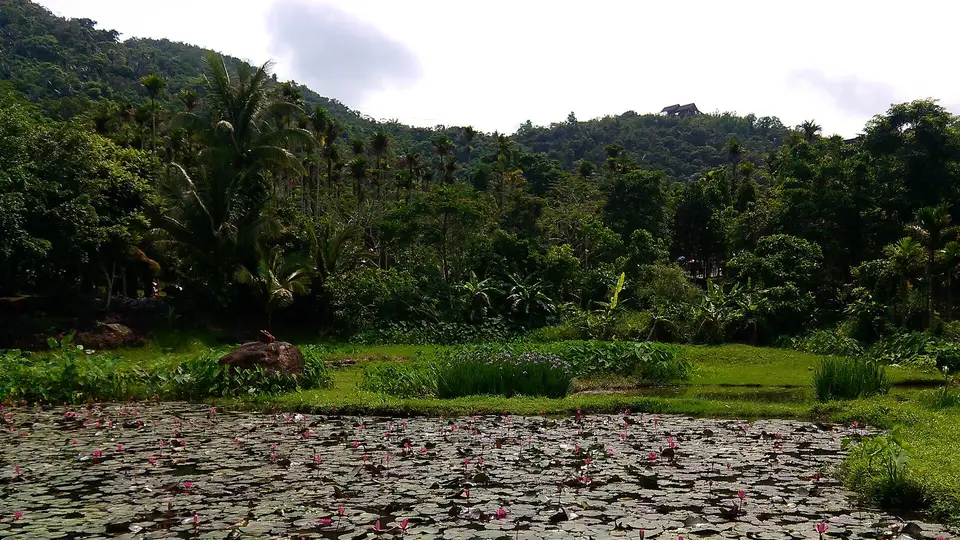
China covers a huge range of ecosystems, from tropical rainforest in Hainan to the high, cold grasslands of the Tibetan Plateau and the tidal flats of the Yellow Sea. Over seven decades the country has built up thousands of protected sites, and since the 2010s it has been reorganizing them into a single system with national parks at its center. This article explains the main types of protected area, the first national parks, the "ecological red line" policy and the laws that support them.
For background on why these places matter, see our overview of biodiversity in China.
From the first nature reserve to thousands of sites
China's first national nature reserve, Dinghushan in Guangdong Province, was established in 1956 to protect subtropical forest near the city of Zhaoqing. It later joined UNESCO's Man and the Biosphere program, which links research, conservation and local development.
In the following decades, and especially from the 1980s, provinces, counties and national ministries created many more protected sites. These included nature reserves, forest parks, wetland parks, geoparks, scenic areas and marine protected areas. By the 2010s the result was a large but complicated patchwork: different sites were run by different departments under different rules, and some places carried several overlapping labels.
Reform: a system built around national parks
In 2015 China began piloting national parks, and in June 2019 the central authorities issued a guideline to build a protected-area system "with national parks as the main body". It sorts protected areas into three categories:
- National parks, large areas that represent China's most important natural ecosystems and are managed for strict, unified protection;
- Nature reserves, which protect particular ecosystems, species or natural features;
- Nature parks, such as forest, wetland and geological parks, which allow more recreation and education.
National parks and nature reserves are divided into core protection zones, where human activity is generally prohibited, and general control zones, where activities are strictly limited. The guideline set goals of basically establishing the new system by 2025 and completing it by 2035.
The first five national parks (2021)
On October 12, 2021, at the UN biodiversity conference (COP15) hosted by Kunming, China announced its first five national parks. Together they cover more than 230,000 square kilometers across ten provincial-level regions and protect nearly 30 percent of China's key terrestrial wildlife species, according to the State Council.
| National park | Location | Some notable species and features |
|---|---|---|
| Sanjiangyuan (Three-River-Source) | Qinghai and Tibet | Headwaters of the Yangtze, Yellow and Lancang (Mekong) rivers; snow leopards, wild yaks, Tibetan antelopes |
| Giant Panda | Sichuan, Shaanxi, Gansu | Protects more than 70 percent of China's wild giant pandas |
| Northeast China Tiger and Leopard | Jilin, Heilongjiang | Amur (Siberian) tigers and Amur leopards |
| Hainan Tropical Rainforest | Hainan | Tropical rainforest; home of the Hainan gibbon |
| Wuyishan | Fujian, Jiangxi | Subtropical forests and a long cultural history |
Sanjiangyuan is by far the largest, at about 190,700 square kilometers. Many people live inside or next to these parks, especially herders on the Tibetan Plateau, so the parks combine strict protection with programs that employ local residents as rangers. Our article on community conservation looks at these arrangements in more detail.
In December 2022 the authorities published a spatial plan identifying 49 candidate sites for national parks, including the first five. Together they cover about 1.1 million square kilometers, mostly on land, with about 13 sites on the Qinghai–Tibet Plateau. The candidate list is meant to be flexible, and the plan aims to be broadly in place by 2035.
The National Park Law (2026)
For years national parks operated mainly on the basis of policy documents. On September 12, 2025, the NPC Standing Committee adopted China's first National Park Law, which took effect on January 1, 2026. It sets criteria for establishing parks, confirms the division into core protection and general control zones, calls for unified management and encourages public participation. It also includes a chapter on participation and benefit-sharing, under which park authorities are to give priority to local residents when filling ecological conservation jobs.
Ecological conservation red lines
Protected areas are not the only tool. China also uses ecological conservation red lines (生态保护红线). These are boundaries drawn around land and sea that are judged critical for ecological functions such as water supply, soil conservation and biodiversity, or that are especially fragile. Within red lines, large-scale development is restricted, though some limited activities are allowed.
In April 2023 the Ministry of Natural Resources announced that red lines had been drawn nationwide, covering at least 3.15 million square kilometers: at least 3 million square kilometers of land (more than 30 percent of China's land area) and at least 150,000 square kilometers of sea. Red lines overlap with, but are broader than, the protected-area system. How well they work depends on monitoring and on correcting violations when they are found.
The Wetlands Protection Law (2022)
Wetlands, including marshes, lakes, rivers, peatlands, mangroves and tidal flats, were long covered only by scattered provisions in other laws. On December 24, 2021, the NPC Standing Committee adopted a dedicated Wetlands Protection Law, which took effect on June 1, 2022. Among other things, it:
- applies to wetlands that meet its legal definition, not only those on official lists;
- includes special provisions for peatlands and mangroves;
- prohibits destroying the habitats of birds and aquatic life in wetlands;
- asks governments to raise public awareness, for example through wetland days or weeks.
Coastal wetlands are a special concern, because many were lost to land reclamation before stricter controls were introduced in 2018. Our article on the Yellow Sea tidal flats tells that story, and our explainer on wetland ecosystems describes why wetlands matter.
International context
China hosted the first part of COP15, the meeting that led in December 2022 to the Kunming-Montreal Global Biodiversity Framework. Its Target 3, often called "30 by 30", calls for at least 30 percent of the world's land and sea to be effectively conserved by 2030 through well-managed protected areas and other effective area-based conservation measures, while recognizing the rights and territories of Indigenous peoples and local communities.
Challenges
The new system is still being built. Common issues raised by researchers and officials include:
- Overlaps and boundaries: merging older sites into national parks means redrawing boundaries and deciding which rules apply.
- People in parks: many protected areas contain villages, farmland and grazing land, so protection must be balanced with livelihoods.
- Enforcement and monitoring: red lines and reserves only work if violations are detected and corrected.
- Connectivity: wildlife needs corridors between protected areas, especially as roads and railways expand. The Wildlife Protection Law asks infrastructure to avoid key habitats and migration routes.
References
- Chinese Academy of Sciences, "Reserve a Scientific Sanctuary" (Dinghushan), 2025. https://english.cas.cn/research/highlight/cpcn/202505/t20250513_1043549.shtml
- The State Council of the People's Republic of China, "Nature offered more protection" (on the 2019 protected-area guideline), 2019. https://english.www.gov.cn/policies/policywatch/201907/09/content_WS5d240d3bc6d03ce67879a0f3.html
- The State Council of the People's Republic of China, "China's first 5 national parks guard wildlife", 2021. https://english.www.gov.cn/policies/policywatch/202110/14/content_WS616785abc6d0df57f98e1a33.html
- China Daily, "49 sites identified for national park system", 2022. https://govt.chinadaily.com.cn/s/202212/30/WS63ae3d7a498ea274927acb3d/49-sites-identified-for-national-park-system.html
- China Daily (NPC site), "China adopts law dedicated to national park development", 2025. https://subsites.chinadaily.com.cn/npc/2025-09/13/c_1125444.htm
- The State Council of the People's Republic of China, "China completes drawing ecological protection red lines nationwide", 2023. https://english.www.gov.cn/news/202304/22/content_WS64439583c6d03ffcca6ec8a2.html
- NPC Observer, "Wetlands Protection Law of the People's Republic of China". https://npcobserver.com/legislation/wetlands-protection-law/
- Convention on Biological Diversity, "Target 3: Conserve 30% of Land, Waters and Seas", Kunming-Montreal Global Biodiversity Framework. https://www.cbd.int/gbf/targets/3