China's Wildlife Protection Law: how it works and how it has changed since 1988
China's main wildlife law dates from 1988 and was overhauled in 2016 and 2022. This guide explains what it protects, the 2020 ban on eating terrestrial wild animals, the 2021 protected list and how it is enforced.
China's Wildlife Protection Law is the country's central piece of legislation on wild animals. It decides which species are protected, what people may and may not do with them, and which government departments are responsible. Since 2016 the law has changed considerably, partly in response to the COVID-19 pandemic. This guide explains the main stages, using official texts and dates, for readers who want to understand how the system works.
A note on names: the law's Chinese title is 野生动物保护法. Official English translations call it either the "Wildlife Protection Law" or the "Law on the Protection of Wildlife". Despite the English word "wildlife", the law deals only with wild animals; wild plants are covered by separate regulations.
Origins: the 1988 law
The original law was adopted on November 8, 1988, at the Fourth Meeting of the Standing Committee of the Seventh National People's Congress (NPC), China's national legislature, and took effect on March 1, 1989. It created the basic structure that still exists today:
- a national list of key protected wild animals, divided into Class I (the strictest protection) and Class II;
- licensing for hunting and other uses;
- responsibilities shared between forestry authorities (for land animals) and fisheries authorities (for aquatic animals).
The law was amended in minor ways in 2004, 2009 and 2018, and fully revised twice, in 2016 and 2022.
What the law covers
Under Article 2 of the current law, protected wildlife means rare and endangered terrestrial and aquatic wild animals, plus terrestrial wild animals of "important ecological, scientific or social value". That last group is sometimes called the "three values" list. Ordinary aquatic species that are not rare or endangered, such as most commercial fish, are managed under the Fisheries Law instead.
Article 10 says that the protected lists are to be reviewed every five years, and that provinces may add their own lists of locally protected species.
The 2016 revision
The first full revision was adopted on July 2, 2016, and took effect on January 1, 2017. It added stronger language on protecting habitats and set up a licensing system for captive breeding of key protected species.
The revision was controversial. Some conservation groups argued that it treated wild animals too much as a resource to be "utilized", and that captive-breeding rules could allow illegally caught animals to be passed off as farmed. Supporters replied that the law put protection first and allowed case-by-case management. These debates came back into focus a few years later.
February 2020: the decision on eating wild animals
After the outbreak of COVID-19, the NPC Standing Committee acted quickly. On February 24, 2020, it adopted a decision on comprehensively prohibiting illegal wildlife trade and eliminating the consumption of wild animals. It took effect the same day. Its main points were:
- Eating terrestrial wild animals was banned. This covered protected species and all other terrestrial wild animals, including those bred or raised in captivity.
- Hunting, trading and transporting terrestrial wild animals that live in the wild for food was prohibited.
- Aquatic animals were not included, because the decision repeatedly specifies "terrestrial" animals.
- Livestock and poultry listed in the national catalogue of livestock and poultry genetic resources were excluded and remained under animal husbandry law.
- Non-food uses such as scientific research, medicine and public display were not banned, but were to be subject to strict approval and quarantine.
- Local governments were asked to support farmers whose livelihoods were affected.
In May 2020 the Ministry of Agriculture and Rural Affairs published an updated catalogue listing 33 kinds of livestock and poultry. Some farmed species, such as certain deer and fur animals, were listed, while dogs were not. The catalogue matters because animals on it are regulated as livestock rather than as wildlife. For more on why the government linked wildlife and public health, see our article on wildlife markets and public health.
2021: a new list of protected animals and new crimes
The updated List of Key Protected Wild Animals
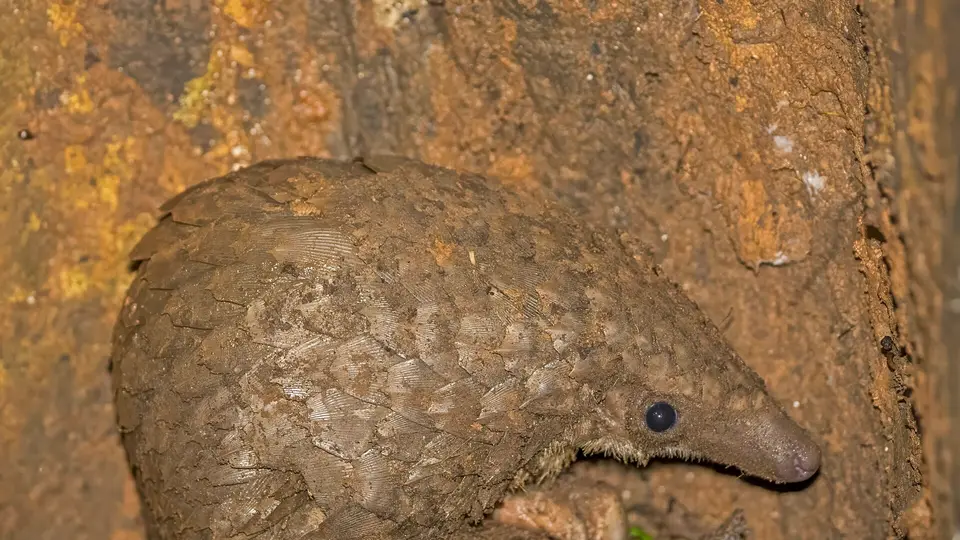
In February 2021, the National Forestry and Grassland Administration and the Ministry of Agriculture and Rural Affairs published a revised List of Wild Animals under Key State Protection, described by the authorities as the first major adjustment in 32 years. It covers 980 species and 8 broader groups (categories), and added 517 species and groups that had not been listed before. Some species were moved up from Class II to Class I, and others were added for the first time. Pangolins had already been raised to Class I protection in 2020, as explained in our article on pangolins.
Criminal Law Amendment XI
The criminal law was also updated. Criminal Law Amendment XI, adopted on December 26, 2020, and in force from March 1, 2021, made it a crime, in serious cases, to illegally hunt, buy, transport or sell terrestrial wild animals living in the wild for the purpose of eating them. It also created an offense of illegally introducing, releasing or discarding invasive alien species.
The 2022 revision
The second full revision was adopted on December 30, 2022, at the 38th Meeting of the Standing Committee of the 13th NPC, and took effect on May 1, 2023. It wrote much of the 2020 decision into the law itself and added new rules. Key provisions include:
- Food: Article 31 prohibits eating key protected wild animals, "three values" species and other terrestrial wild animals, and prohibits hunting, trading or transporting wild-living terrestrial animals for food, as well as producing or selling food made from them.
- Habitats: Article 12 provides for important habitats to be listed and included in national parks, nature reserves and other protected areas. Article 13 asks that roads, railways and other infrastructure avoid key habitats and migration routes, or else include measures to reduce harm to wildlife. Our article on national parks and protected areas explains this system.
- Captive breeding: Breeding key protected species requires a license (Article 25), and products from species bred under approved programs must carry special labels so they can be traced (Article 29).
- Online platforms and markets: Article 33 says online platforms, trading markets and restaurants must not provide services for illegal wildlife trade or consumption.
- Release and invasive species: Article 40 requires approval to bring in wild animal species from abroad and bans illegally releasing them into the wild. Article 41 says animals released into the wild must be species suited to the local environment and must not harm people or ecosystems. This is especially relevant to pet turtles; see red-eared sliders and invasive pets.
- Human–wildlife conflict: Governments must compensate for injuries and losses caused by protected wildlife (Article 19), and the 2022 revision extended this support to losses caused by other terrestrial wild animals that do serious damage.
Enforcement
Enforcement involves several agencies. Forestry and grassland departments manage terrestrial wildlife, agriculture and fisheries departments manage aquatic species, and market regulators, customs, transport and postal authorities oversee trade and shipping (Article 35). Police and courts handle criminal cases. Under Article 6, anyone may report violations.
Penalties range from confiscation of animals and illegal earnings to fines calculated as multiples of the animals' value, and, for serious cases, criminal prosecution. Commentators continue to point to challenges: wildlife trade has moved online and through delivery services, captive breeding can be used to launder wild-caught animals, and local authorities vary in their capacity. Our overview of the illegal wildlife trade puts these issues in a global context.
What this means for readers in China
- Do not buy wild animal meat, live wild animals or products of uncertain origin.
- Do not release pets or "rescued" market animals into the wild; this may be illegal and harmful.
- If you find an injured wild animal, contact your local forestry and grassland bureau or a licensed rescue center instead of handling it yourself.
- Report suspected illegal trade to market regulators, forestry authorities or the police, or through the reporting tools on online platforms.
References
- National People's Congress (via China Daily NPC site), "Wildlife Conservation Law of the People's Republic of China" (English text, revised 2022). https://subsites.chinadaily.com.cn/npc/2022-12/30/c_1085104.htm
- UNODC SHERLOC, "Law of the People's Republic of China on the Protection of Wildlife" (1988 text). https://sherloc.unodc.org/cld/uploads/res/document/law-of-the-peoples-republic-of-china-on-the-protection-of-wildlife_html/Protection_of_Wildlife_Law_1988.pdf
- China Dialogue (Dialogue Earth), "Second draft revision of China's Wildlife Protection Law 'a big step backwards'", 2016. https://dialogue.earth/en/nature/second-draft-revision-of-chinas-wildlife-protection-law-a-big-step-backwards/
- NPC Observer, "China Postpones 2020 NPC Session 'As Appropriate' & Imposes Near-Total Ban on Consuming Wild Animals", 2020. https://npcobserver.com/2020/02/24/china-postpones-2020-npc-session-as-appropriate-imposes-near-total-ban-on-consuming-wild-animals/
- China Daily, "Listing of animals to help stop illegal sales of wildlife", 2020. https://global.chinadaily.com.cn/a/202005/29/WS5ed0f338a310a8b2411598bd.html
- CGTN, "China adds 517 types of wildlife to state protection list", 2021. https://news.cgtn.com/news/2021-02-07/China-adds-517-types-of-wildlife-to-state-protection-list-XGbas6pKpy/index.html
- NPC Observer, "Criminal Law Amendment XI". https://npcobserver.com/legislation/criminal-law-amendment-xi
- The State Council of the People's Republic of China, "China enhances wildlife protection as law takes effect", 2023. https://english.www.gov.cn/news/202305/02/content_WS645057e1c6d03ffcca6ecc99.html