How the illegal wildlife trade works, and how it can be stopped
A plain-language guide to wildlife trafficking: the supply chain, why people buy, the shift to online sales, CITES and Chinese law, and practical steps readers can take.

Most wildlife trade is legal. Farmed fish, timber with proper paperwork and many plants sold in garden shops are traded openly under national and international rules. The illegal wildlife trade is the part that breaks those rules: animals and plants taken from protected populations, moved without permits, or sold in places where the trade is banned. It ranges from songbirds caught with nets to tonnes of ivory hidden in shipping containers.
This guide explains how that trade is organized, why demand persists, how it has moved online, and what laws and ordinary people can do about it.
How big is the problem?
Nobody knows the true size of an illegal market, because only the part that gets caught is recorded. The best available picture comes from seizures. The United Nations Office on Drugs and Crime (UNODC) examined seizure records for its World Wildlife Crime Report 2024. It found that seizures made between 2015 and 2021 showed illegal trade in 162 countries and territories, involving around 4,000 species of animals and plants. Roughly 3,250 of those species are listed under CITES, the international treaty on wildlife trade.
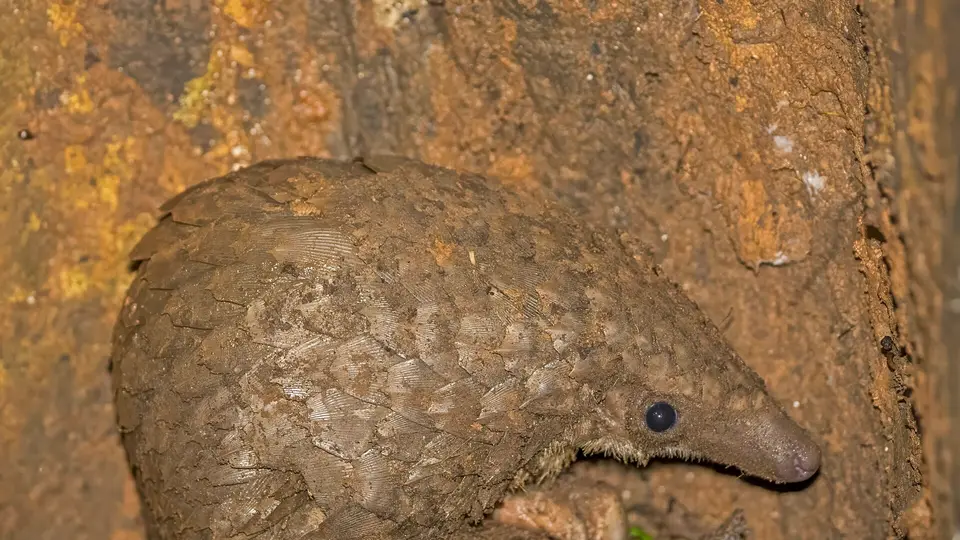
The report found some progress for elephants and rhinoceroses: where action against both supply and demand was combined with stricter market controls and the pursuit of high-level traffickers, poaching and seizure levels fell. But it concluded that wildlife trafficking overall has not been substantially reduced over two decades. Well-known animals such as pangolins attract attention, yet much of the trade involves reptiles, birds, corals, fish and plants that rarely make headlines.
How the supply chain works
Illegal wildlife usually passes through several hands before it reaches a buyer.
At the source
The chain begins with whoever captures or kills the animal. This may be a local hunter who sells to whoever is buying, or an organized team working to order. In many places the people at this end earn the least, while the largest profits are made further along the chain.
Middlemen and processing
Traders collect animals or parts from many sources, then process or disguise them. Scales may be removed from pangolins, turtles packed into luggage, or birds sedated for transport. Processing makes products harder to identify, which helps traffickers avoid detection.
Crossing borders
To move goods internationally, traffickers hide them among legal cargo, mislabel shipments, use forged permits, or claim that wild-caught animals were bred in captivity. Because CITES depends on permits and paperwork, fraud at this stage can make illegal goods look legal.
Reaching buyers
Finally, products reach consumers through shops, markets, restaurants, pet dealers, private collectors and, increasingly, the internet.
What drives demand?
People buy wild animals and plants for many reasons:
- Food, especially when rare species are treated as luxury dishes or status symbols.
- Traditional medicine, where some products are used even when safe alternatives exist.
- Pets and collections, including turtles, birds, reptiles and orchids. Rarity can make a species more desirable to collectors, which adds pressure on the species that can least afford it.
- Decoration and fashion, such as carvings, jewelry, skins and feathers.
- Belief and custom, including religious uses or the release of animals for good fortune.
Demand is not fixed. Public awareness campaigns, changing tastes and stronger laws can all reduce it, which is why education plays such an important part in conservation.
The move online
Wildlife trafficking has followed other commerce onto the internet. Sellers use online marketplaces, social media, messaging apps and live-streams, often with code words or private groups to avoid filters. A study of Chinese court records on wildlife crime found offenders who traded animal products through online shopping and messaging platforms.
In 2018, WWF, TRAFFIC and IFAW launched the Coalition to End Wildlife Trafficking Online together with technology companies; early members included Alibaba, Baidu, eBay, Facebook, Google and Microsoft. The conservation groups share information on how traffickers advertise, and member companies remove listings that break their rules. Online enforcement remains difficult, but platforms now face clearer expectations than before.
CITES: the international rulebook
The Convention on International Trade in Endangered Species of Wild Fauna and Flora (CITES) was agreed in Washington, D.C., in 1973 and entered into force on 1 July 1975. It now has more than 180 Parties and covers more than 40,000 species. Listed species are placed in one of three appendices:
- Appendix I covers species threatened with extinction. International commercial trade in wild specimens is generally prohibited.
- Appendix II covers species that could become threatened if trade is not controlled. Trade is allowed with permits showing it is legal and not harmful to wild populations.
- Appendix III covers species that a particular country has asked others to help regulate.
CITES only governs trade across borders. It relies on each Party's own laws, customs officers and police to enforce it, which is why national legislation matters so much. (For how scientists judge extinction risk, see our guide to the IUCN Red List.)
Enforcement in China
China has strengthened its rules in recent years. On 24 February 2020, the Standing Committee of the National People's Congress adopted a decision banning the hunting, trade and transport of terrestrial wild animals for food, including those bred in captivity, with some exceptions. The Wildlife Protection Law was then revised; the new version was adopted on 30 December 2022 and took effect on 1 May 2023.
The revised law prohibits online platforms, markets and restaurants from providing display, trading or consumption services for the illegal sale, purchase, eating or use of wildlife and wildlife products, or for banned hunting tools. It also encourages members of the public to report violations. Courts have heard thousands of wildlife crime cases, and research based on those records helps authorities understand who offends and why.
Laws alone do not end trafficking. Enforcement depends on trained officers, cooperation between countries, and public support. It also depends on reducing demand, so that fewer people want to buy in the first place. The links between wildlife trade and disease risk are discussed in our article on wildlife markets and public health.
What you can do
Everyone can help reduce the illegal wildlife trade without taking any risks:
- Do not buy wild animals or their products unless you are certain they are legal and sustainably sourced. If a seller cannot explain where something came from, do not buy it.
- Be careful with souvenirs when you travel. Ivory, tortoiseshell, coral, some shells and some plants may need permits or be banned altogether. Bringing them home could break the law in two countries.
- Think twice about exotic pets. Ask whether the animal was captive-bred and whether you can care for it for its whole life. Never release a pet into the wild; see our article on red-eared sliders and invasive pets.
- Do not share or "like" videos that show wild animals kept as pets or handled for entertainment. Engagement can encourage demand.
- Report suspicious sales. Use the reporting tools on online platforms, or contact your local forestry, agriculture or market-regulation authority. In mainland China, call the police on 110 if you see an urgent crime. Do not confront sellers yourself.
- Talk about it. Teachers, parents and students can share accurate information. People who understand where wildlife products come from are less likely to buy them.
The illegal wildlife trade is a global problem, but it depends on individual choices at every step. Fewer buyers means fewer animals taken from the wild.
References
- United Nations Information Service Vienna, "Despite two decades of concerted action, wildlife trafficking persists worldwide with more than 4,000 species affected, says new UNODC World Wildlife Crime Report", 2024. https://unis.unvienna.org/unis/en/pressrels/2024/uniscp1175.html
- UNODC, "World Wildlife Report" (data and analysis page). https://www.unodc.org/unodc/en/data-and-analysis/wildlife.html
- CITES Secretariat, "What is CITES?". https://cites.org/eng/disc/what.php
- Coalition to End Wildlife Trafficking Online (WWF, TRAFFIC, IFAW). https://www.endwildlifetraffickingonline.org/
- National People's Congress (via China Daily), "Decision of the Standing Committee of the National People's Congress on a Complete Ban of Illegal Wildlife Trade and the Elimination of the Unhealthy Habit of Indiscriminate Wild Animal Meat Consumption for the Protection of Human Life and Health", 2020. https://subsites.chinadaily.com.cn/npc/2020-02/24/c_674680.htm
- Ministry of Ecology and Environment of the PRC, "中华人民共和国野生动物保护法" (Wildlife Protection Law, 2022 revision), 2023. https://www.mee.gov.cn/ywgz/fgbz/fl/202302/t20230220_1016885.shtml
- Shao M-L, Newman C, Buesching CD, Macdonald DW, Zhou Z-M, "Understanding wildlife crime in China: Socio-demographic profiling and motivation of offenders", PLOS ONE, 2021. https://doi.org/10.1371/journal.pone.0246081