Red-eared sliders and the problem of released pets
The red-eared slider is one of the world's most widespread pet turtles and one of its worst invasive species. Learn where it comes from, why releasing pets causes harm, and what to do instead.
Many children in China have kept a small green turtle in a bowl at home. These turtles are often sold as baxigui (巴西龟), "Brazilian turtle." Despite the name, the red-eared slider does not come from Brazil. It is native to North America, and when released into the wild elsewhere, it can become a serious invasive species.
This article explains how a popular pet became an environmental problem, why releasing animals does more harm than good, and how to care for a pet turtle responsibly.
Meet the red-eared slider
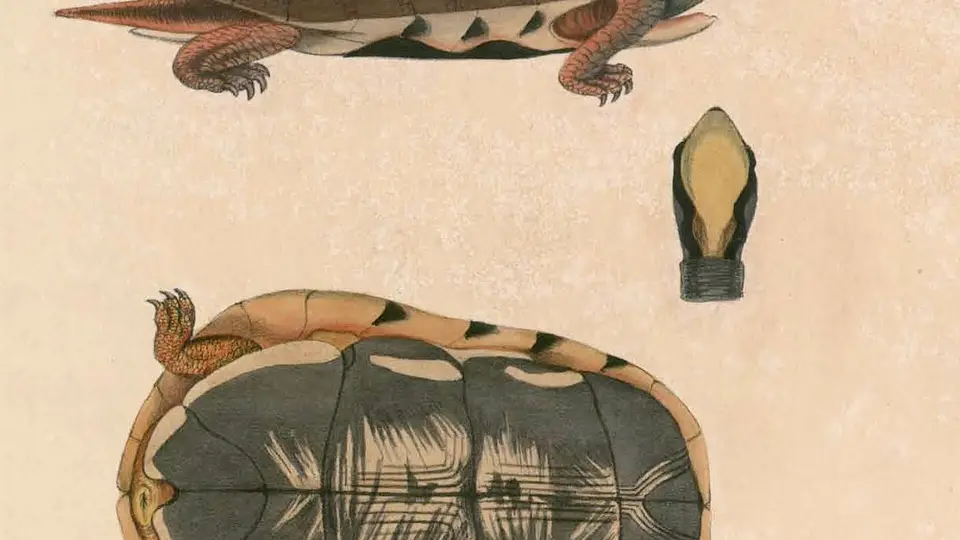
The red-eared slider (Trachemys scripta elegans) is a freshwater turtle. It is easy to recognize by the red or orange stripe behind each eye, which gives it its name, and by the yellow stripes on its head and legs. "Slider" refers to its habit of sliding quickly off logs and rocks into the water when disturbed.
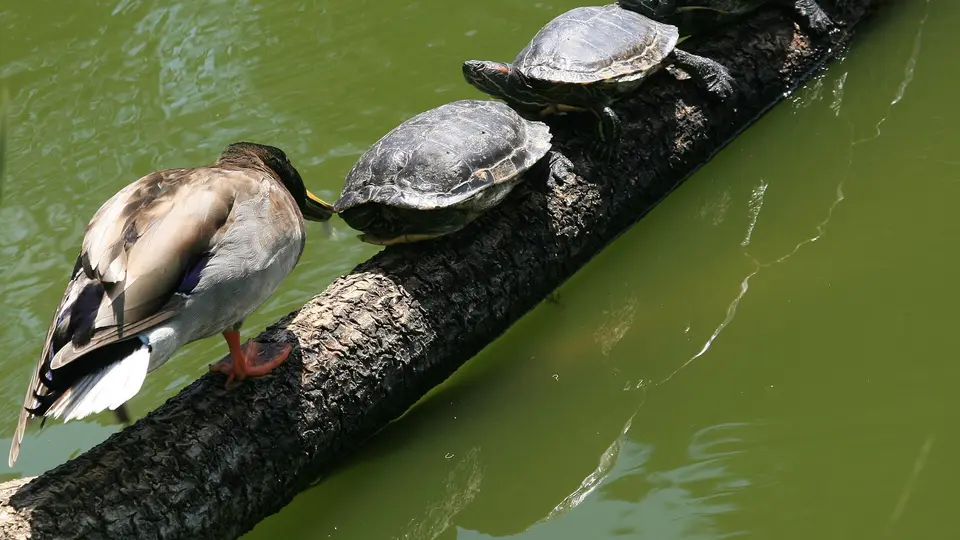
Its native range is in the United States. According to the California Department of Fish and Wildlife, it includes the Mississippi Valley from Illinois to the Gulf of Mexico, extending east to West Virginia and west to eastern New Mexico. There it lives in ponds, lakes, slow rivers and marshes, basking in the sun for warmth.
Hatchlings are only a few centimeters long, which makes them look like an easy pet. But they grow. Adults can reach roughly 13 to 28 centimeters (about 5 to 11 inches) in shell length, and the turtles can live for decades. The California Department of Fish and Wildlife reports that they can live for up to 40 years in captivity.
From pet shop to invader
Red-eared sliders have been bred in huge numbers for the pet trade and also traded as food. As a result, they have been carried to many parts of the world. When owners lose interest, move house, or find that their turtle has grown too large, some release it into a local pond or river. Others release turtles as an act of merit or for good luck.
Red-eared sliders are hardy and adaptable. They eat a wide range of food and live for many years, qualities that help them succeed in new places. The IUCN Invasive Species Specialist Group includes the red-eared slider in its list of "100 of the World's Worst Invasive Alien Species."
Harm to native wildlife
Where they have been released, red-eared sliders can:
- Compete with native turtles for food, basking spots and nesting sites. This is a particular concern in Asia, where many native turtles are already threatened; see our article on the Asian turtle crisis.
- Eat native plants and animals, including aquatic plants, fish and other small animals.
- Spread parasites and diseases to native reptiles.
- Carry Salmonella bacteria, which can make people sick.
Every released pet adds to these problems. Released turtles may also suffer or die if they cannot cope with local conditions.
Invasive species and the law in China
China treats invasive alien species as a biosecurity issue. In January 2023, an updated list of 59 invasive alien species under key management took effect, and the red-eared slider is included on that list.
Several laws are relevant to pet owners:
- The Biosecurity Law, in force since April 2021, sets penalties for introducing alien species into China without approval, and for releasing or discarding alien species without approval. People who release or discard alien species can be ordered to recapture them and fined.
- The revised Wildlife Protection Law, in force since May 2023, states that wildlife species introduced from abroad must not be illegally released or discarded. It also says that anyone releasing wildlife should choose local species suited to the release site and avoid harming ecosystems.
Courts have also enforced the rules. In 2024, a court in Zhuhai, Guangdong Province, sentenced a man to nine months in prison and a fine of 100,000 yuan for illegally bringing 1,760 red-eared sliders into the country, in what China Daily reported as the first publicly sentenced case of its kind.
Why "releasing" is not kindness
Releasing animals is often meant as a kind act. But releasing a pet, or buying animals in order to release them, usually causes harm:
- The animal may die from cold, hunger, disease or predators.
- If it survives, it may harm native species and ecosystems.
- Buying animals for release creates more demand for capture and breeding.
If you want to help wildlife, there are better ways: protecting local wetlands, supporting native species, and never buying wild animals. Our article on the illegal wildlife trade explains how demand for animals drives harm elsewhere.
Responsible pet ownership
If you are thinking of getting a turtle, or already have one, here are some practical guidelines.
Before you buy
- Think long term. A turtle can live for decades. Make sure your family is ready to care for it for its whole life.
- Plan for size. A tiny hatchling will need a much bigger tank or pond as it grows.
- Ask questions. Find out what species you are buying and what care it needs. Avoid impulse purchases at markets or roadside stalls.
Caring for a turtle
- Provide clean water, an area to climb out and bask, and suitable warmth and lighting. New Zealand's Department of Conservation notes that adult sliders need a large heated aquarium or a secure outdoor pond, and that care can be costly.
- Feed a varied diet suitable for the species.
- Practice good hygiene. Wash your hands with soap and water after touching the turtle, its water or equipment, and supervise young children. This reduces the risk of Salmonella infection.
If you can no longer keep it
- Never release it into a pond, river, lake or park.
- Ask friends or family who can provide proper care whether they will adopt it.
- Contact a reptile rescue group, an animal shelter, or your local agriculture or forestry department for advice on rehoming.
What schools and families can do
Teachers and parents can use pet turtles as a starting point for learning about ecosystems. Students can research where common pets come from, map the native species in a local pond, or design posters explaining why pets should never be released. Any pond or river visits should take place with adult supervision and attention to water safety.
Red-eared sliders are not villains. They are simply animals living in the wrong place. Keeping them out of the wild, and taking good care of the ones already in our homes, is a simple way for everyone to protect local nature.
References
- California Department of Fish and Wildlife, "California's Invaders: Red-Eared Slider". https://wildlife.ca.gov/Conservation/Invasives/Species/Redeared-Slider
- IUCN SSC Invasive Species Specialist Group, Global Invasive Species Database, "100 of the World's Worst Invasive Alien Species". https://www.iucngisd.org/gisd/100_worst.php
- New Zealand Department of Conservation, "Turtle time is a long time", 2024. https://doc.govt.nz/news/media-releases/2024-media-releases/turtle-time-is-a-long-time
- China Daily, "Man jailed for smuggling 'ecological killer' turtles", 2024. https://www.chinadaily.com.cn/a/202409/19/WS66ec1da3a3103711928a8b97.html
- China News Service, "如何打赢外来入侵物种阻击战?科研提供新依据新方法" (research supporting the fight against invasive alien species), 2023. https://www.chinanews.com.cn/gn/2023/01-18/9937785.shtml
- National People's Congress (via China Daily), Biosecurity Law of the People's Republic of China, Article 81. https://subsites.chinadaily.com.cn/npc/2020-10/17/c_703568_5.htm
- Ministry of Ecology and Environment of the PRC, "中华人民共和国野生动物保护法" (Wildlife Protection Law, 2022 revision), 2023. https://www.mee.gov.cn/ywgz/fgbz/fl/202302/t20230220_1016885.shtml