The Yellow Sea tidal flats: a lifeline for migratory shorebirds
The Yellow Sea and Bohai Gulf tidal flats are a vital refueling stop for migratory shorebirds. Reclamation destroyed much of them; since 2018, stricter rules, World Heritage listing and restoration have helped.
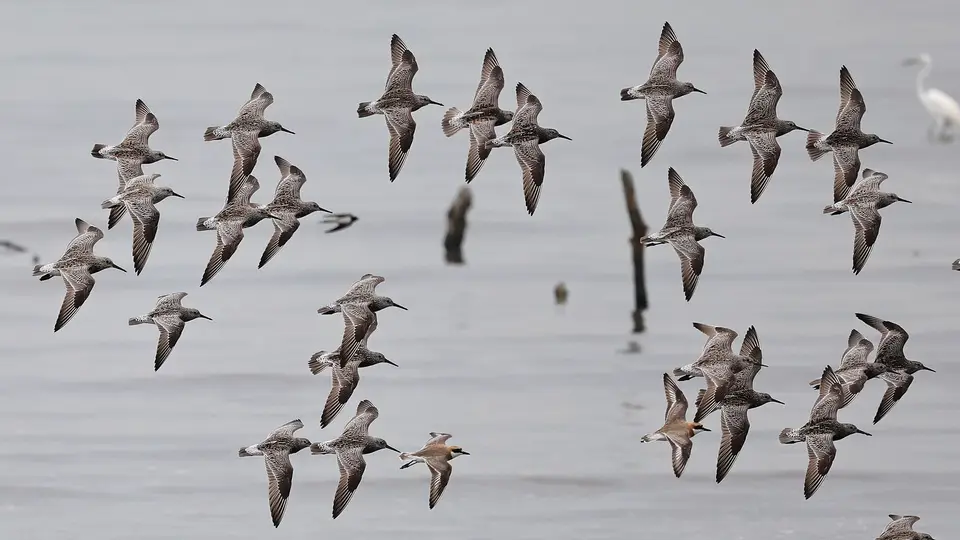
Twice a day, the tide retreats from the coasts of the Yellow Sea and the Bohai Gulf and uncovers vast plains of mud and sand. To a casual visitor these tidal flats can look empty. In fact they are full of worms, clams, snails and crabs, and every spring and autumn they become feeding grounds for huge numbers of migratory shorebirds. This article explains why these flats matter, what scientists have learned about their loss, and how protection and restoration have developed since 2018.
Where are the Yellow Sea tidal flats?
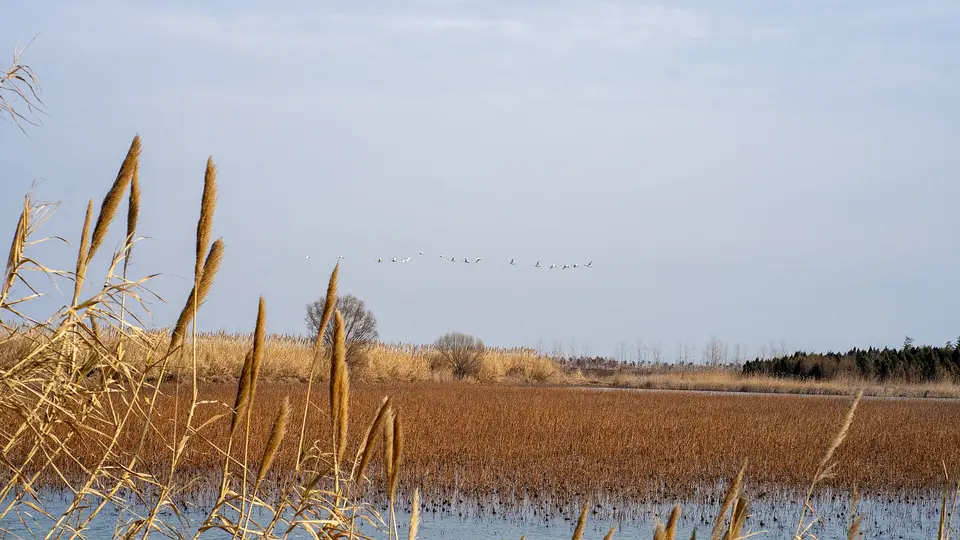
The Yellow Sea lies between eastern China and the Korean Peninsula. Its northwestern arm, enclosed by the Liaodong and Shandong peninsulas, is the Bohai Gulf (or Bohai Sea). Large rivers, including the Yellow River and the Yangtze, have carried enormous amounts of sediment to these coasts. Combined with a gently sloping seabed and a large tidal range, this sediment has created some of the most extensive tidal flats in the world, along the coasts of China, North Korea and South Korea.
A refueling station on the flyway
The Yellow Sea sits in the middle of the East Asian–Australasian Flyway, a migration route used by birds that breed in Siberia, Mongolia, northern China and Alaska and spend the northern winter in Southeast Asia, Australia and New Zealand. Our article on the migratory bird flyway explains how such flyways work.
Many shorebirds, such as great knots, bar-tailed godwits and curlews, fly thousands of kilometers between breeding and wintering grounds. They cannot make the whole journey in one flight. Instead they stop at a few key sites to rest and rapidly rebuild their fat reserves. For many species, the Yellow Sea tidal flats are the most important of these stopovers, especially on the northward migration in spring. UNESCO describes the region as a bottleneck for migratory birds on the flyway.
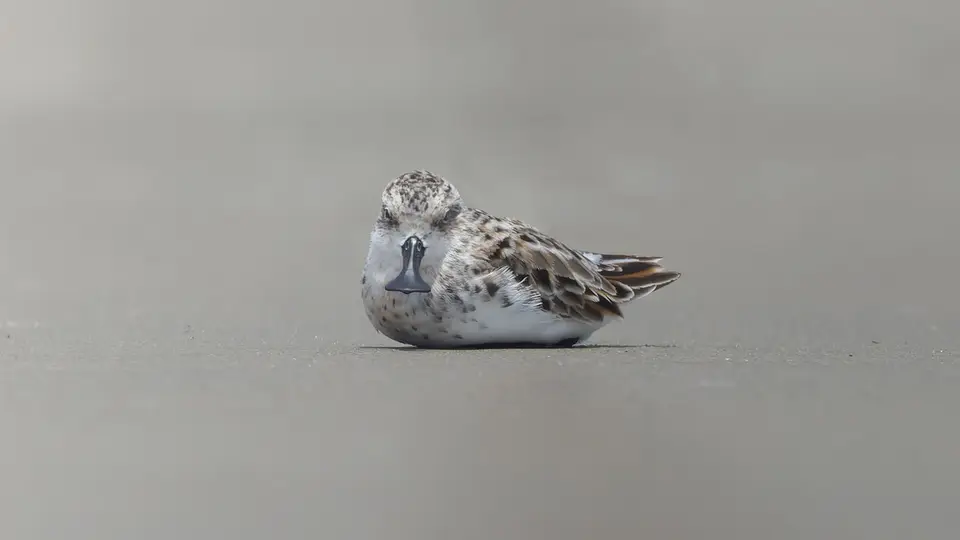
Species of particular conservation concern that use these flats include the Critically Endangered spoon-billed sandpiper, the Endangered Far Eastern curlew and the great knot.
How much has been lost?
During the late twentieth and early twenty-first centuries, large areas of tidal flat were enclosed by seawalls and filled in, a process called reclamation. The new land was used for ports, industrial zones, aquaculture ponds, farmland and housing.
Satellite imagery has made it possible to measure the scale of this change. A 2014 study led by Nicholas Murray, using Landsat images of about 4,000 kilometers of coastline in China, North Korea and South Korea, found that around 28 percent of the tidal flats present in the 1980s had disappeared by the late 2000s, an average loss of about 1.2 percent per year. Comparison with older maps suggested that up to 65 percent may have been lost over roughly five decades. Reclamation for urban, industrial and agricultural use was the main cause.
Other pressures add to reclamation: pollution, disturbance, reduced river sediment, and the spread of the invasive cordgrass Spartina alterniflora, which can turn open mudflats into dense saltmarsh that shorebirds cannot use for feeding.
For a wider view of these processes, see our article on habitat loss.
Evidence from the birds themselves
Several peer-reviewed studies link the loss of Yellow Sea habitat with declining bird populations:
- Studds and colleagues (2017), using about two decades of counts by citizen scientists in Australia and New Zealand, found that seven of ten shorebird taxa studied were declining, at rates of up to 8 percent a year. The species that relied most heavily on the Yellow Sea during migration were declining fastest.
- Piersma and colleagues (2016) tracked marked red knots, great knots and bar-tailed godwits in northwest Australia. Their survival was high during the non-breeding season but dropped sharply during the migratory and breeding part of the year from 2011, consistent with problems at Yellow Sea stopover sites.
Together, these studies made a strong case that protecting a relatively small coastal region could make a large difference to birds across an entire flyway.
A turning point: reclamation controls (2018)
In January 2018 China's State Oceanic Administration announced a halt to business-oriented coastal reclamation. In July 2018 the State Council issued a notice on strengthening the protection of coastal wetlands and strictly controlling reclamation. It stopped new approvals of reclamation projects except for major national projects, required investigation of illegal or improperly approved projects, and required those responsible to restore damaged coastal areas.
Coastal wetlands are also covered by China's Wetlands Protection Law (in force since June 2022) and by "ecological red lines" along the coast, described in our article on national parks and protected areas.
World Heritage recognition: 2019, 2024 and 2026
The flats have gained international recognition through UNESCO's World Heritage List.
- 2019 (Phase I): The World Heritage Committee inscribed "Migratory Bird Sanctuaries along the Coast of Yellow Sea-Bohai Gulf of China (Phase I)", made up of two areas in Yancheng, Jiangsu Province.
- 2024 (Phase II): At its 46th session in New Delhi in July 2024, the Committee approved an extension adding five more areas along the coast, bringing the property to twelve component parts with a total area of about 289,700 hectares. BirdLife International noted that the Yalu River estuary near Dandong, Liaoning, is among the newly listed sites.
- 2026: At its 48th session in Busan, Republic of Korea, in July 2026, the Committee approved a minor boundary modification adding the Changshan Islands off Dalian, Liaoning. Chinese media report that this area of more than 4,900 hectares supports the world's largest breeding population of the Vulnerable Chinese egret and is also used by black-faced spoonbills.
The Republic of Korea has its own World Heritage site for its tidal flats, so much of the Yellow Sea coast is now internationally recognized.
Restoration in practice
Since about 2018, attention has shifted from simply stopping losses toward restoring habitat. In Yancheng, for example, projects have combined removal of invasive Spartina, improvements to seawalls and coastline, and the creation of high-tide roosting areas where shorebirds can rest when the flats are covered by water. China Daily reports that up to 224 spoon-billed sandpipers have been recorded at the Tiaozini wetland in Dongtai in recent years.
Restoration is slow and expensive, and many reclaimed areas cannot easily be returned to mudflat. Scientists and conservation groups stress that protecting the remaining natural flats, and coordinating action across the whole flyway, remain the priorities.
How you can get involved
- Visit responsibly. Many coastal reserves welcome birdwatchers. Keep your distance from roosting flocks, especially at high tide, when birds have little space to retreat. Our guide to wetland ecosystems has more background.
- Join a count. Volunteer shorebird counts along the flyway provide much of the data scientists rely on.
- Learn safely. Tidal flats can be dangerous: tides come in quickly and mud can be deep. Children should always be supervised by adults, and visitors should follow local guidance on tides.
References
- Murray, N.J., Clemens, R.S., Phinn, S.R., Possingham, H.P. and Fuller, R.A., "Tracking the rapid loss of tidal wetlands in the Yellow Sea", Frontiers in Ecology and the Environment 12(5), 2014. https://doi.org/10.1890/130260
- Studds, C.E. et al., "Rapid population decline in migratory shorebirds relying on Yellow Sea tidal mudflats as stopover sites", Nature Communications 8, 14895, 2017. https://doi.org/10.1038/ncomms14895
- Piersma, T. et al., "Simultaneous declines in summer survival of three shorebird species signals a flyway at risk", Journal of Applied Ecology 53(2), 2016. https://doi.org/10.1111/1365-2664.12582
- The State Council of the People's Republic of China, "Land reclamation under strict regulation", 2018. https://english.www.gov.cn/policies/latest_releases/2018/07/25/content_281476236284048.htm
- UNESCO World Heritage Committee, decision approving the Phase II extension of the Migratory Bird Sanctuaries along the Coast of Yellow Sea-Bohai Gulf of China (46th session), 2024. https://whc.unesco.org/en/decisions/8595
- China Daily, "Changshan Islands on World Heritage List", 2026. https://govt.chinadaily.com.cn/s/202607/28/WS6a680e12498e23165e071681/changshan-islands-on-world-heritage-list.html
- China Daily, "Yancheng drives wetland restoration", 2025. https://epaper.chinadaily.com.cn/a/202509/19/WS68ccada4a310bb2da09741c5.html