Habitat loss and fragmentation: the biggest threat to wildlife
When forests, wetlands and grasslands are cleared or cut into pieces, wildlife runs out of room. We explain the science, look at pandas, gibbons and tidal flats in China, and show how corridors help.
Every animal and plant needs somewhere to live: a place with the right food, shelter, water and conditions to breed. Biologists call this its habitat. When habitat disappears, wildlife disappears with it. Hunting, pollution and climate change all matter, but around the world the single biggest pressure on nature is the conversion of land and sea to human uses. This article explains what habitat loss and fragmentation are, why scientists rank them as the leading driver of biodiversity decline, what they look like in China, and how restoration and wildlife corridors can help reverse the damage.
Loss, degradation and fragmentation
These three terms describe related but different problems.
- Habitat loss is the outright removal of a habitat, for example when a forest is cleared for farmland, a lake is drained or a mudflat is filled in for a port.
- Habitat degradation means the habitat is still there but in worse condition, for example a river polluted by wastewater or a forest where the largest trees have been logged.
- Habitat fragmentation happens when a large, continuous habitat is broken into smaller, separate patches by roads, railways, farms, dams or towns.
Fragmentation is easy to overlook because the total area of habitat may not seem to change much. But for many animals, a landscape of small, isolated patches is very different from one large block.
Why fragments are not enough
- Small patches support small populations. Small populations are more likely to die out by chance, through disease, a bad breeding season or a natural disaster.
- Isolation leads to inbreeding. When animals cannot move between patches, they breed with close relatives, which can reduce genetic diversity and health over time.
- Edges change conditions. The edges of a forest patch are often hotter, drier, windier and more exposed to predators, people and invasive species than its interior.
- Barriers can be deadly. Animals that try to cross roads or other barriers risk being killed, and some species will not cross open ground at all.
The main driver of biodiversity decline
In 2019, the Intergovernmental Science-Policy Platform on Biodiversity and Ecosystem Services (IPBES) published the most comprehensive global assessment of nature yet produced. Compiled by 145 expert authors from 50 countries, it ranked the direct drivers of change in nature by their global impact. Changes in land and sea use came first, followed by direct exploitation of organisms, climate change, pollution and invasive alien species.
The assessment's headline findings included:
- around 1 million animal and plant species are now threatened with extinction;
- three-quarters of the land-based environment and about 66% of the marine environment have been significantly altered by human actions;
- more than 85% of wetlands present in 1700 had been lost by 2000.
In other words, while climate change is growing in importance, the conversion of natural habitats has so far done the most damage to the world's wildlife.
Examples from China
China's rapid development over recent decades brought great economic change, and with it heavy pressure on natural habitats. At the same time, China offers some of the best-known examples of efforts to reconnect and restore habitat.
Giant pandas: a forest in pieces
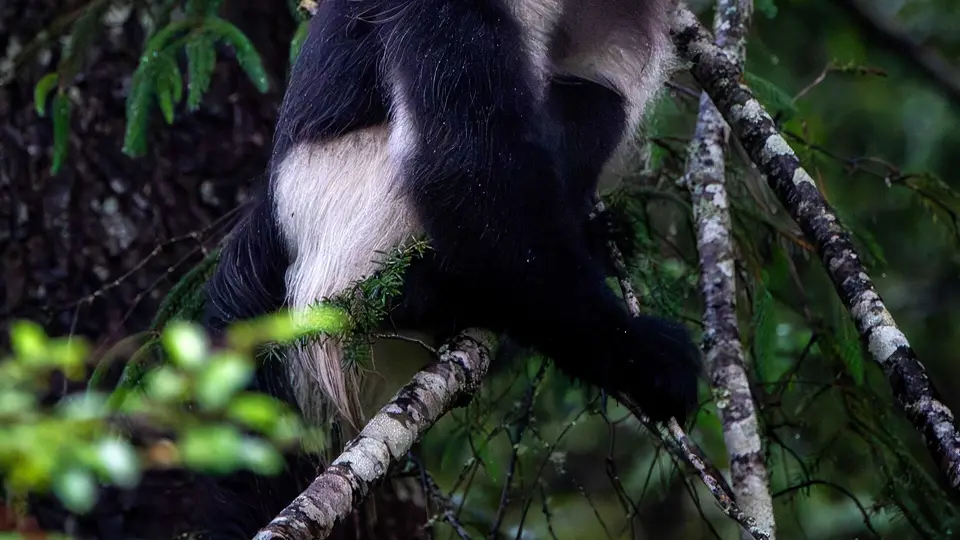
Giant pandas live in mountain forests in Sichuan, Shaanxi and Gansu. According to The Nature Conservancy, China's Fourth National Giant Panda Survey found wild pandas divided among 33 isolated populations, separated by roads, historical logging and natural geographic barriers. Some of these populations are very small, which puts them at risk from inbreeding, disease and natural disasters.
In response, Sichuan launched a natural forest protection program in 1998, new railways and expressways have been routed through tunnels to avoid panda habitat, and ecological corridors have been built to link separated habitats. Chinese media reported in 2021 that Sichuan had built six such corridors, planting bamboo and native trees, and that infrared cameras had recorded pandas using them. The Giant Panda National Park, established in 2021, brings much of the species' remaining habitat under unified protection. Our article on national parks and protected areas explains how China's protected area system is organized.
The Hainan gibbon: one forest, one population
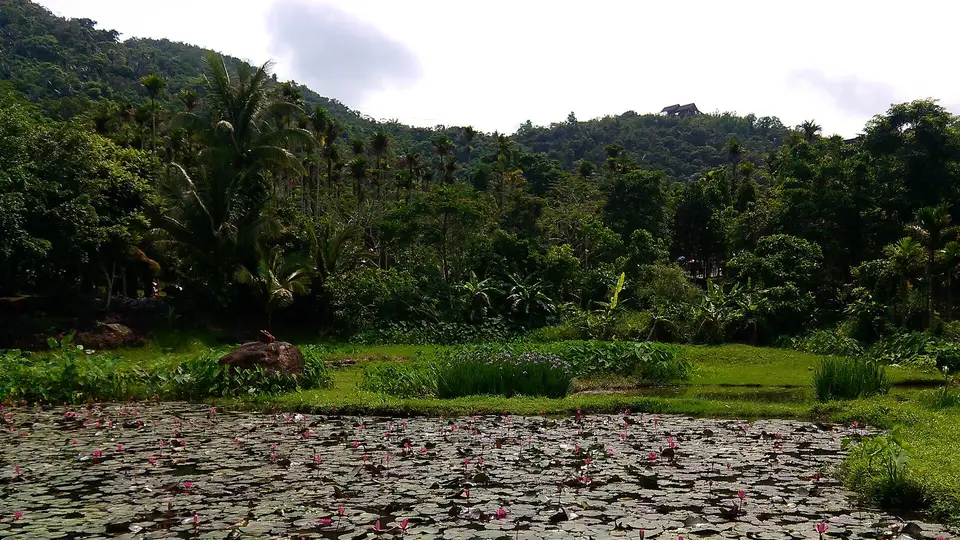
The Hainan gibbon is found only on Hainan Island and is one of the rarest primates in the world. A 2017 study in Oryx described how the species, once widespread on the island, retreated to a single area, Bawangling, as lowland forests were cleared and logged and as hunters killed whole family groups. By the late 1970s and 1980s, only about 10 individuals were thought to survive.
Decades of protection, patrols and habitat restoration have allowed a slow recovery. A 2025 study reported a global population of 42 gibbons in seven groups, all in the Bawangling area of what is now Hainan Tropical Rainforest National Park. The gibbons' story shows both how close habitat loss can bring a species to extinction and how much effort is needed to bring it back.
Tidal flats: habitat lost to land reclamation
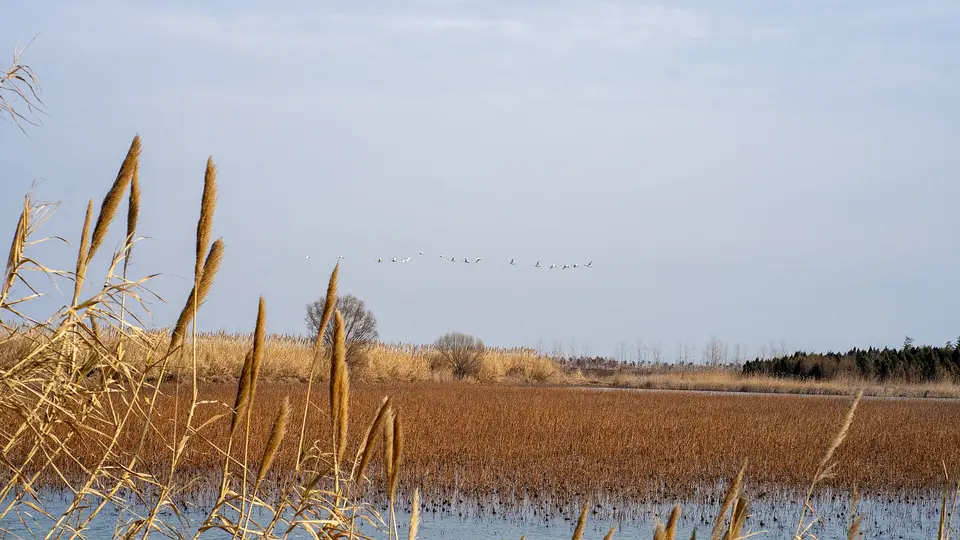
Along the Yellow Sea coast, vast intertidal mudflats support millions of migratory shorebirds. A 2014 study using satellite images found that about 28% of the tidal flats present around the Yellow Sea in the 1980s had disappeared by the late 2000s, mainly through reclamation for urban, industrial and agricultural use, with the greatest losses along China's coast. Historical maps suggested losses of up to 65% over five decades. Many of the shorebirds that depend on these stopovers are now of conservation concern. Read more in our articles on the Yellow Sea tidal flats and wetland ecosystems.
Restoration and corridors
Stopping further loss is the first and cheapest step, because restoring damaged habitat is slow and never fully recreates what was lost. Where habitat has already been lost or divided, several approaches can help.
- Protected areas and national parks. Large, well-managed protected areas keep core habitats intact.
- Wildlife corridors. Strips or stepping stones of habitat, such as replanted forest along a valley, can allow animals to move between patches.
- Crossing structures. Underpasses, overpasses and tunnels allow roads and railways to pass without cutting habitats in two.
- Restoration. Replanting native vegetation, removing barriers in rivers and returning reclaimed land to wetland can bring habitats back over time.
- Wildlife-friendly land use. Farms, plantations and towns can be managed to leave hedgerows, ponds and native trees that help wildlife move and survive.
These approaches are now part of global targets. The Kunming–Montreal Global Biodiversity Framework, adopted in 2022, includes targets to have at least 30% of degraded ecosystems under effective restoration and to conserve at least 30% of land and sea areas by 2030, with attention to how well protected areas are connected. You can read more about China's role in the framework in our overview of biodiversity in China.
What you can do
- Learn about your local habitats. Find out which green spaces, rivers and wetlands near you support wildlife, and how they connect.
- Make space for nature. Schools and families can plant native species, leave wild corners and create small ponds. Our page on school conservation activities has ideas.
- Stay on paths in nature reserves and parks to reduce disturbance and damage.
- Have a say. Local planning decisions about roads, housing and riverbanks shape habitats for decades.
Habitat loss happens one field, one road and one mudflat at a time. Protection and restoration can happen the same way.
References
- IPBES, "Nature's Dangerous Decline 'Unprecedented'; Species Extinction Rates 'Accelerating'" (media release), 2019. https://www.ipbes.net/news/Media-Release-Global-Assessment
- IPBES, "Global Assessment Report on Biodiversity and Ecosystem Services", 2019. https://www.ipbes.net/global-assessment
- The Nature Conservancy, "Room to Roam: Reconnecting China's Giant Pandas". https://www.nature.org/en-us/about-us/where-we-work/asia-pacific/china/stories-in-china/giant-panda-dens/
- China Daily, "Ecological corridors help expand giant pandas' habitat", 2021. https://govt.chinadaily.com.cn/s/202112/28/WS61ca7323498e6a12c121be03/ecological-corridors-help-expand-giant-pandas-habitat.html
- Deng H., Zhang M. and Zhou J., "Recovery of the Critically Endangered Hainan gibbon Nomascus hainanus", Oryx 51(1), 2017. https://doi.org/10.1017/S0030605315000678
- Li P. et al., "Preliminary study on premature infant death of Hainan gibbons (Nomascus hainanus): implications for conservation", Frontiers in Conservation Science 6, 2025. https://www.frontiersin.org/journals/conservation-science/articles/10.3389/fcosc.2025.1652155/full
- Murray N.J. et al., "Tracking the rapid loss of tidal wetlands in the Yellow Sea", Frontiers in Ecology and the Environment 12(5), 2014. https://doi.org/10.1890/130260
- Convention on Biological Diversity, "Kunming-Montreal Global Biodiversity Framework". https://www.cbd.int/gbf