Biodiversity in China: a megadiverse country, its hotspots and the global biodiversity framework
From tropical rainforest to the Tibetan Plateau, China holds a remarkable share of the world's wildlife. We explore its hotspots and endemic species, the threats they face and China's role in global biodiversity goals.
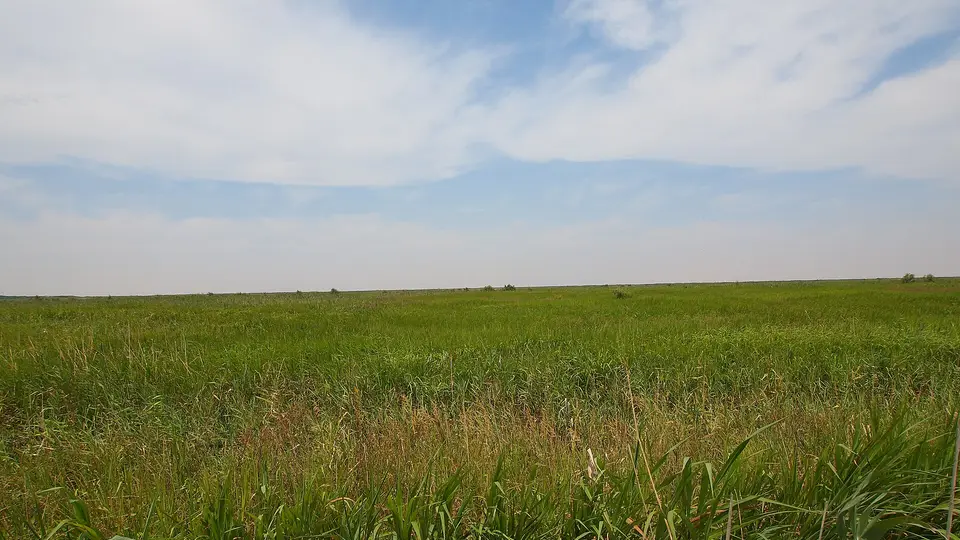
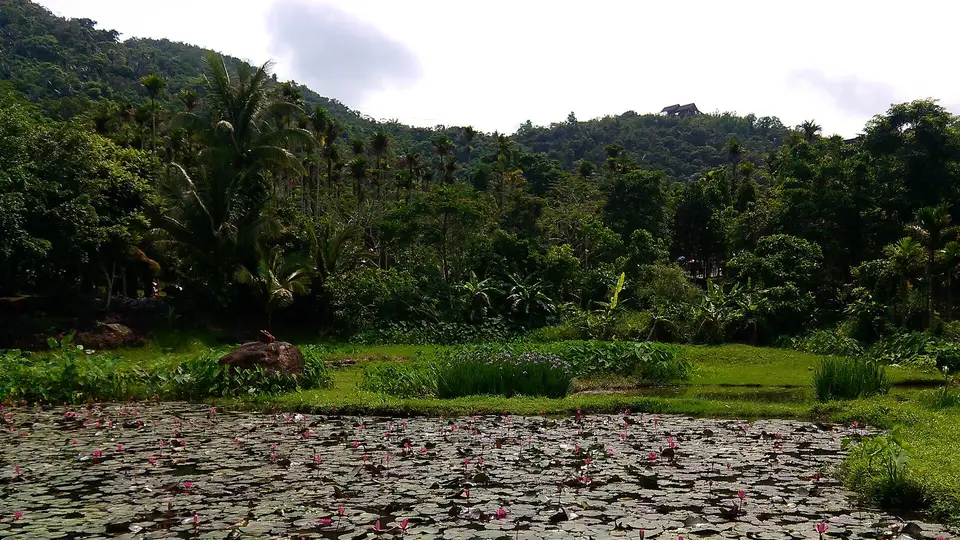
"Biodiversity" is short for biological diversity: the variety of life at every level, from genes to species to whole ecosystems. Few countries can match China for it. Within its borders are tropical rainforests, temperate and boreal forests, deserts, grasslands, the high Tibetan Plateau, great rivers and lakes, and a long coastline with mudflats, mangroves and coral reefs. This article gives an overview of China's biodiversity, the places where it is most concentrated, some of its best-known species, the threats it faces and China's role in the global effort to protect nature.
A megadiverse country
Scientists use the term "megadiverse" for the small group of countries that together hold a large share of the world's species, especially species found nowhere else. China is recognized as one of them, alongside countries such as Brazil, Indonesia and Mexico.
Several factors help explain this richness:
- Size and range of climates. China stretches from tropical Hainan in the south to cold forests in the far northeast, and from sea level to the highest mountains on Earth.
- Mountains. Mountain ranges create many different habitats within short distances, from warm valleys to alpine meadows. Isolated valleys and peaks allow new species to evolve.
- Rivers and wetlands. Major river systems such as the Yangtze and Pearl rivers, along with thousands of lakes, support rich freshwater life.
- A long evolutionary history. Parts of southern and central China are home to ancient lineages of plants and animals that survived there over long periods.
China's national profile with the Convention on Biological Diversity (CBD), based on a 2008 inventory, lists more than 35,000 species of higher plants, of which around half are endemic to China, and more than 6,000 species of vertebrates.
Biodiversity hotspots
Conservation scientists have identified a set of global "biodiversity hotspots": regions with exceptionally high numbers of endemic plants that have also lost much of their original habitat. Parts of China fall within several of them.
The Mountains of Southwest China
The Mountains of Southwest China hotspot covers the rugged ranges of southeastern Tibet, western Sichuan and central and northern Yunnan, including the Hengduan Mountains. Deep river gorges cut through these ranges, where several of Asia's great rivers flow side by side. According to the Critical Ecosystem Partnership Fund (CEPF), the hotspot holds about 12,000 species of vascular plants, roughly 29% of them found nowhere else, making it one of the most botanically rich temperate forest regions in the world. It is especially rich in rhododendrons, many of which are endemic to the region.
The same mountains are home to giant pandas, red pandas, takin, golden and Yunnan snub-nosed monkeys and many pheasants.
Other hotspot regions
Southern China, including parts of Yunnan, Guangxi and Hainan, lies within the wider Indo-Burma hotspot, which stretches across Southeast Asia.
Endemic and flagship species
Some of China's best-known animals are found nowhere else.
Giant panda
The giant panda lives only in mountain forests in Sichuan, Shaanxi and Gansu. After China's fourth national survey counted 1,864 adult pandas in the wild, a 17% rise over the previous decade, the IUCN changed the species' status from Endangered to Vulnerable in 2016. The IUCN credited forest protection and reforestation, but warned that climate change could eliminate more than 35% of the panda's habitat within 80 years. Wild pandas are also divided among many isolated populations, a problem explained in our article on habitat loss and fragmentation.
Snub-nosed monkeys
China is home to most of the world's snub-nosed monkeys, a group of colorful, upturned-nosed primates adapted to cool mountain forests.
- The golden snub-nosed monkey lives in forests of central and southwestern China, including Sichuan, Shaanxi, Gansu and Hubei.
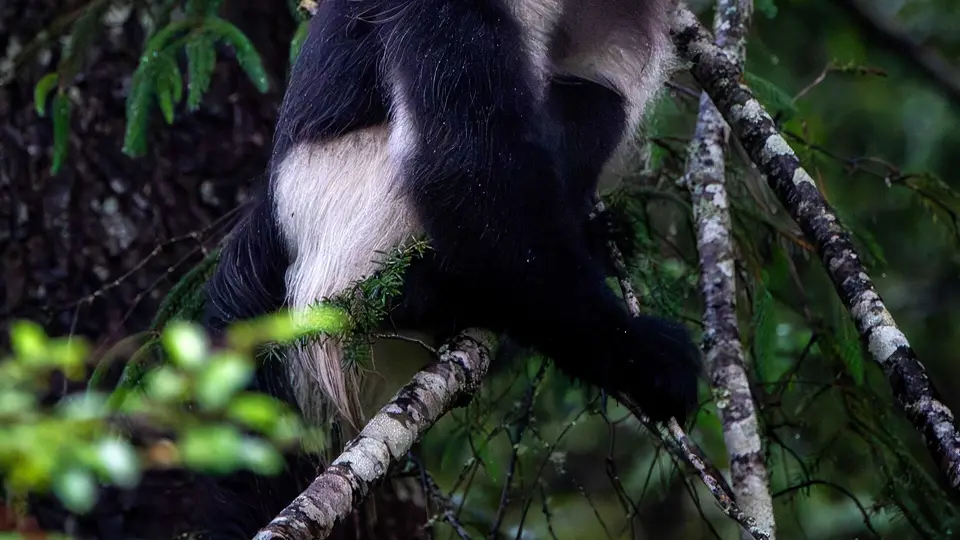
- The Yunnan snub-nosed monkey, shown above, lives in high mountain forests along the divide between the Mekong and Salween rivers in northwestern Yunnan and is assessed as Endangered. It is sometimes called the black snub-nosed monkey.
- The Guizhou snub-nosed monkey is found only in the Fanjingshan area of Guizhou and is the rarest of the three, with a population estimated in the hundreds.
All three depend on large areas of intact forest and have been affected by logging, habitat loss and, in the past, hunting.
Other examples
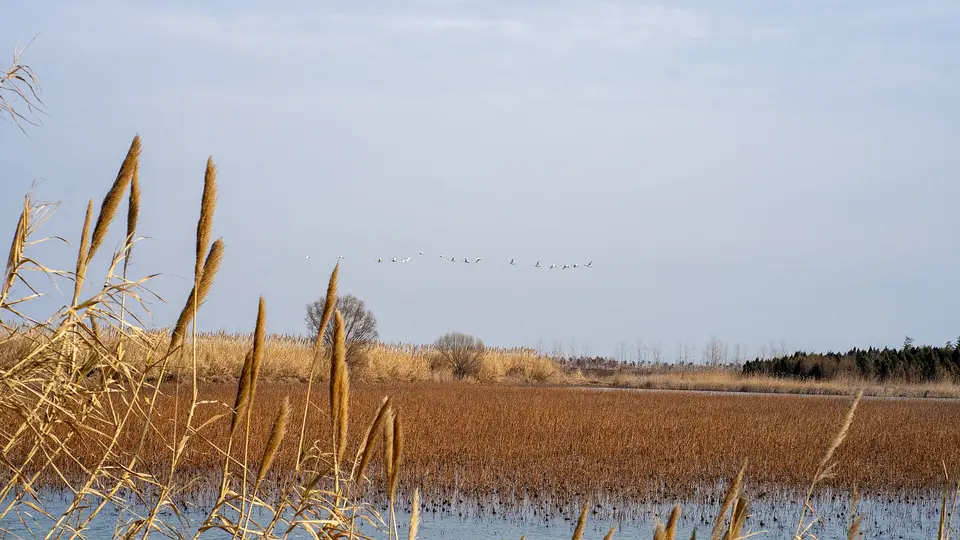
China's endemic or near-endemic species include the Chinese giant salamander, the world's largest amphibian, which is assessed as Critically Endangered; the Yangtze finless porpoise; the Hainan gibbon; and plants such as the dawn redwood, which was known from fossils before living trees were identified in central China in the 1940s. China's wetlands and coasts are also crucial for migratory birds that do not breed in China but depend on it each year, as described in our article on the East Asian–Australasian Flyway.
Threats to China's biodiversity
The pressures on China's wildlife are similar to those found worldwide. China's CBD profile lists:
- habitat loss and degradation caused by urban growth, industry, agriculture and infrastructure;
- overexploitation and disorderly use of biological resources;
- pollution, which especially affects rivers, lakes and coastal waters;
- invasive alien species, which can outcompete or prey on native species;
- climate change, whose effects are still being assessed.
You can find out how scientists rank extinction risk in our guide to the IUCN Red List.
Protecting biodiversity in China
China has built up a large network of protected areas over several decades, starting with nature reserves and now increasingly organized around national parks. In October 2021, China announced its first five national parks: Sanjiangyuan, Giant Panda, Northeast China Tiger and Leopard, Hainan Tropical Rainforest and Wuyishan. According to Xinhua, together they cover about 230,000 square kilometers and protect nearly 30% of the key terrestrial wildlife species found in the country. Our article on national parks and protected areas explains how the system works.
China and the Kunming–Montreal Global Biodiversity Framework
The Convention on Biological Diversity is the main international treaty on nature. Its 15th Conference of the Parties (COP15) was held under China's presidency in two parts: the first in Kunming, Yunnan, in October 2021, and the second in Montreal, Canada, in December 2022, where the Kunming–Montreal Global Biodiversity Framework was adopted.
The framework sets four long-term goals for 2050 and 23 targets for 2030. Among the best known:
- Target 2: at least 30% of degraded land, inland water, coastal and marine ecosystems under effective restoration by 2030;
- Target 3: at least 30% of land, inland waters and coastal and marine areas effectively conserved by 2030 through well-connected protected areas and other effective area-based conservation measures, an aim often called "30 by 30";
- Targets 18 and 19: reducing harmful subsidies by at least US$500 billion a year and mobilizing at least US$200 billion a year for biodiversity by 2030.
During the Kunming session in 2021, China announced it would put 1.5 billion yuan into a new Kunming Biodiversity Fund to support biodiversity protection in developing countries.
The framework's success depends on countries turning targets into national action, including in China, where development and conservation must be balanced across a vast and varied landscape.
What you can do
- Get to know local wildlife. Even city parks, rivers and school grounds support surprising biodiversity.
- Take part in citizen science, such as bird counts and river surveys, to help track how species are doing.
- Avoid products from threatened species, and report illegal wildlife trade.
- Visit protected areas responsibly, following their rules and staying on paths.
China's biodiversity is a national treasure and part of the world's shared natural heritage. Understanding it is the first step to protecting it.
References
- Convention on Biological Diversity, "China – Country Profile". https://www.cbd.int/countries/profile?country=cn
- Critical Ecosystem Partnership Fund, "Mountains of Southwest China". https://www.cepf.net/our-work/biodiversity-hotspots/mountains-southwest-china
- Mammal Diversity Database, "Rhinopithecus bieti". https://www.mammaldiversity.org/taxon/1000683
- PBS NewsHour, "Giant panda downgraded; Eastern gorilla declining", 2016. https://www.pbs.org/newshour/world/giant-panda-off-endangered-species-list
- Xinhua, English-language report on the COP15 leaders' summit in Kunming, 12 October 2021. https://www.news.cn/english/2021-10/12/c_1310239983.htm
- Convention on Biological Diversity, "Kunming-Montreal Global Biodiversity Framework". https://www.cbd.int/gbf
- Convention on Biological Diversity, "COP15: Final text of Kunming-Montreal Global Biodiversity Framework", 2022. https://www.cbd.int/article/cop15-final-text-kunming-montreal-gbf-221222