Raptors of China: kites, eagles, falcons and owls
Kites, eagles, falcons and owls keep ecosystems healthy, but they face poisoning, illegal trapping and trade. Learn how China protects them and what to do if you find one in trouble.
Birds of prey, also called raptors, are birds that hunt or scavenge using sharp eyesight, strong feet with curved talons, and hooked beaks. China is home to a wide variety of them, from kites gliding over harbors to eagles in the mountains and owls calling at night in city parks. Many more pass through the country on migration each spring and autumn.
This article introduces the main groups of raptors, explains why they matter, and describes the threats they face and how they are protected.
Who are the raptors?
Kites, hawks, buzzards and eagles
These belong mostly to the family Accipitridae. They range from small sparrowhawks that chase songbirds through trees to large eagles that hunt hares or fish. Buzzards often hunt rodents in open fields, and vultures feed on dead animals.
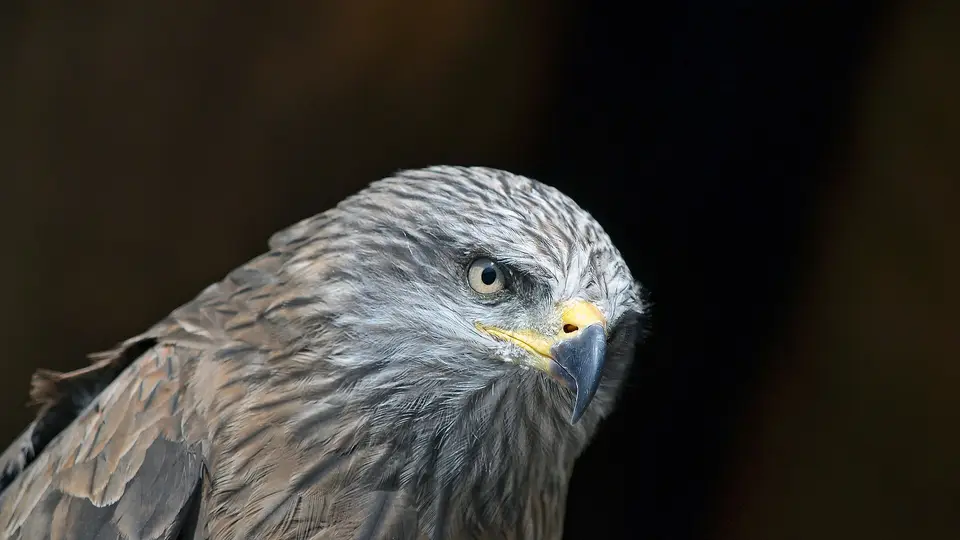
The black kite is one of the most familiar. It is a medium-sized brown raptor with long wings and a slightly forked tail, and it is often seen circling over water, farmland and towns. In Hong Kong, the Hong Kong Bird Watching Society describes it as the commonest raptor. There, black kites are conspicuous around Victoria Harbour all year, feed mainly on dead fish but also on offal, frogs, snakes and insects, and gather at communal night roosts in winter, when local birds are joined by migrants from the north.
Falcons
Falcons (family Falconidae) are fast, agile hunters with long pointed wings. The common kestrel hovers over grassland looking for small mammals and insects. Larger falcons, such as the saker falcon and gyrfalcon, hunt birds and mammals in open landscapes. Some falcons are highly prized in falconry, which has made them targets for illegal capture.
Owls
Owls are mostly nocturnal raptors with forward-facing eyes, excellent hearing and soft feathers that allow almost silent flight. China's owls range from small owlets to the Eurasian eagle-owl, one of the largest owls in the world. Many owls feed largely on rodents.
Why raptors matter
Raptors are predators and scavengers near the top of food chains, and they play important roles:
- Controlling rodents and other pests. Owls, buzzards and kestrels eat large numbers of mice and rats, which benefits farmers.
- Cleaning up. Scavengers such as kites and vultures remove dead animals and waste.
- Indicating environmental health. Because raptors are near the top of food chains, poisons and pollutants build up in them. A decline in raptors can be an early warning that something is wrong in the wider environment.
Threats
Poisoning
Raptors can be poisoned directly, when someone deliberately puts out poisoned bait, or indirectly, when they eat animals that have already been poisoned. This second route is called secondary poisoning.
A study published in the Journal of Raptor Research in 2018 examined recent bird poisoning incidents in farmland in Taiwan. Testing of dead birds, including black kites, found the pesticide carbofuran and anticoagulant rodenticides (rat poisons). The authors argued that the black kite's sharp decline in Taiwan in the late 20th century was likely linked to secondary poisoning from pesticides used on farmland, and noted that reduced pesticide use has coincided with a slow recovery. Black kites may be especially exposed because they scavenge dead animals.
Trapping and illegal hunting
Raptors are caught with nets and traps, and sometimes shot. Fine mist nets set for migrating birds catch raptors as well as songbirds. China's revised Wildlife Protection Law bans certain hunting tools, and prosecutors have used public interest litigation to pursue illegal bird trapping.
Trade
Raptors are traded illegally as pets, for falconry, as decorations and for use in traditional remedies. A 2021 study in PLOS ONE analyzed Chinese court judgments on wildlife crime. Among birds, hawks and eagles (Accipitridae) and owls (Strigidae) appeared frequently. The study recorded, for example, northern goshawks kept as pets or working birds, Eurasian buzzards used in traditional medicine, owls hunted for food, and Eurasian eagle-owls kept as exotic pets. One offender had traded raptors through an online shopping platform and a messaging app.
Habitat loss
Raptors need large territories with enough prey. The loss of forests, wetlands and grasslands, and the decline of prey animals, reduce the number of raptors an area can support.
Legal protection in China
China's List of Wildlife under State Key Protection was revised in February 2021, the first major update since the list was first issued in 1989. The revised list includes many raptors and owls. According to IFAW, eight raptor species were moved up from second-class to first-class protection, including the saker falcon and gyrfalcon.
Under the revised Wildlife Protection Law, which took effect on 1 May 2023, hunting, selling, buying and eating protected wildlife is prohibited except in narrowly defined circumstances, and online platforms, markets and restaurants must not provide services for the illegal trade in wildlife. Raptors that migrate across borders also benefit from international cooperation along flyways; see our article on migratory birds.
How to report and how to help
If you find an injured raptor
Raptors have sharp talons and beaks and can injure people, even when weak. Do not try to feed, treat or keep the bird yourself.
- Keep people and pets away, and keep your distance.
- Contact your local forestry and grassland bureau, a wildlife authority or a licensed wildlife rescue centre, and follow their advice.
- If they ask you to contain the bird, use a ventilated box and thick gloves or a towel, and keep the box in a quiet, dark place until help arrives.
Our guide on finding an injured wild animal has more detail.
If you see illegal trapping, poisoning or trade
- Note the location, date and what you saw. Take photos only if it is safe to do so.
- Report it to the local forestry authority or to the police. In mainland China, call 110 if a crime is in progress.
- Use the reporting tools on online platforms if you see raptors or owls offered for sale.
- Do not confront hunters or sellers, remove traps, or handle poisoned baits or carcasses, which may be dangerous.
Everyday actions
- Never buy wild-caught raptors, owls, feathers or talons. Our article on the illegal wildlife trade explains how such trade works.
- Avoid using poisons in gardens and farms where possible, and dispose of dead rodents safely.
- Watch raptors from a distance, especially near nests and roosts, and keep photography respectful.
Raptors are some of the most impressive animals that people in China can see without leaving their towns. With protection and public awareness, they can remain a familiar sight for future generations.
References
- Hong Kong Bird Watching Society, "Black Kite Milvus migrans" (Avifauna of Hong Kong). https://avifauna.hkbws.org.hk/species/0180/026100
- Hong S-Y, Lin H-S, Walther BA, Shie J-E, et al., "Recent Avian Poisonings Suggest a Secondary Poisoning Crisis of Black Kites During the 1980s in Taiwan", Journal of Raptor Research, 2018. https://doi.org/10.3356/JRR-17-40.1
- Shao M-L, Newman C, Buesching CD, Macdonald DW, Zhou Z-M, "Understanding wildlife crime in China: Socio-demographic profiling and motivation of offenders", PLOS ONE, 2021. https://doi.org/10.1371/journal.pone.0246081
- IFAW, "China strengthens its Wildlife Protection Law as part of national movement to safeguard animals", 2021. https://www.ifaw.org/international/news/china-strengthens-wildlife-protection-law
- Sixth Tone, "After 30 Years, China Revises Its Protected Wild Animals List", 2021. https://www.sixthtone.com/news/1006814
- Ministry of Ecology and Environment of the PRC, "中华人民共和国野生动物保护法" (Wildlife Protection Law, 2022 revision), 2023. https://www.mee.gov.cn/ywgz/fgbz/fl/202302/t20230220_1016885.shtml
- China Daily / Beijing Review, "How Chinese procuratorial authorities help with migratory birds protection", 2025. https://subsites.chinadaily.com.cn/spp/2025-02/10/c_1069481.htm