Wildlife rescue in Wenzhou, 2009–2012: what the archive shows
Archived reports describe a small volunteer-run rescue station in Cangnan that took in raptors, waterbirds and surrendered exotic pets. Here is what they show — and what we can learn from them.
Between the mid-2000s and the early 2010s, the Green Eyes organization (绿眼睛) ran a small wildlife rescue station in Cangnan County, Wenzhou. The station appears again and again in the news items the organization posted on this website, many of them reposts of reports from Wenzhou newspapers. This page summarizes what those archived items show. It is an independent summary based on copies held by the Internet Archive, not an official record. See our historical archive for background.
A small station, run largely by volunteers
The earliest independent description we have is from 2006, when an article in the Wilson Center's China Environment Series described the group's rehabilitation centre in Wenzhou as modest, with only a few cages. Later archived items refer to a rescue centre (救助中心 or 救助站) in Cangnan, often staffed by volunteers who gave their spare time.
A rescuers' meeting, February 2009
An article posted on the website in February 2009 describes a wildlife-protection exchange meeting held on 8 February 2009 at the Cangnan Youth Palace. Members of the public from Wenzhou, Rui'an, Pingyang and Cangnan who had helped rescue wild animals attended. According to the report, participants:
- watched a national television feature about an earlier whale rescue in which the organization had taken part;
- shared their own experiences of finding and helping injured animals;
- toured the rescue station, where staff explained its facilities and care procedures;
- in the afternoon, released recovered animals — including a black-crowned night heron, a common kestrel and a leopard cat — at a site with relatively intact natural habitat.
The report closes by thanking the volunteers and the youth centre that hosted the event. It is a small but telling snapshot of community-based rescue work: ordinary residents, not specialists, were often the first link in the chain.
Birds of prey and waterbirds
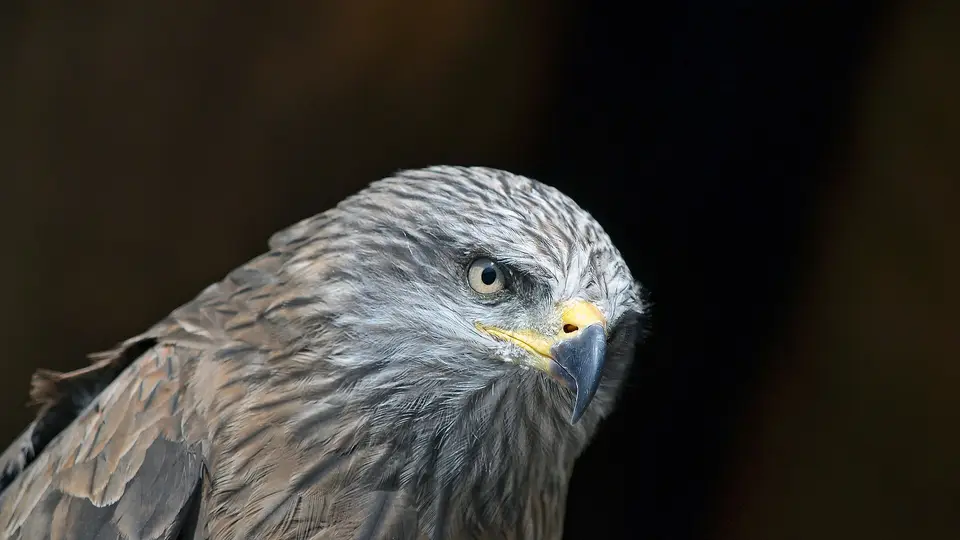
Raptors feature prominently. A January 2010 report from the Wenzhou Commercial Daily (温州商报), reposted on the site, describes a sick black-winged kite that a passer-by found being offered for sale by the roadside in Yueqing. He persuaded the seller to let it go; when it could not fly, he contacted the organization, and it was taken to the Cangnan rescue centre. Staff found no external injury and suspected poisoning. The report notes the species is a nationally protected bird. Poisoning and trapping remain serious threats to raptors; we explain why in Birds of prey in China.
Coastal birds also appear. In December 2009 a Wenzhou Daily item credited the organization with reporting seven Dalmatian pelicans wintering on the Longwan mudflats — a reminder that Wenzhou's estuaries are part of the East Asian–Australasian Flyway.
In August 2009 volunteers recovered the carcass of a finless porpoise, nearly two metres long, from the Aojiang River in Pingyang. Finless porpoises are protected in China; read more in Finless porpoises in China's rivers and seas.
The exotic-pet problem
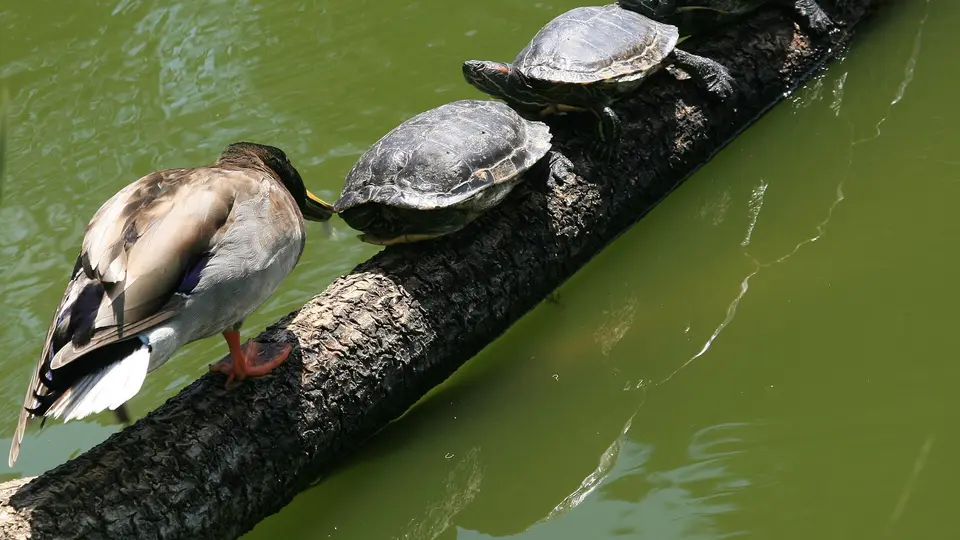
Some of the most revealing archive items concern animals that should never have been in the wild at all. In June 2009 the organization launched a "Take me home" red-eared slider adoption scheme: pet turtles surrendered to the station were rehomed with families who promised to look after them and never release them into the wild, because the species is not native to China. A 2011 report from the Hangzhou newspaper Dushi Kuaibao (都市快报), later reposted on the site, said the centre was holding hundreds of non-native animals — mostly red-eared sliders, but also snapping turtles, pythons and other exotic reptiles, some handed over by forestry officials after seizures of illegally traded animals.
These items describe a problem that rescue centres across China and elsewhere still face. We explain it in Red-eared sliders and the problem of released pets.
What we can learn
- Members of the public are usually the first responders. Knowing what to do — and whom to call — matters. See What to do if you find an injured wild animal.
- Rescue is the last line of defence. Poisoning, trapping and trade send animals to rescue centres; prevention means tackling those causes.
- Pet release is not kindness. Non-native pets released into rivers and ponds can harm native wildlife, and rescue centres are left to care for them.
References
- Daniela Salaverry, "Green Eyes: Taking Action to Halt Illegal Wildlife Trade", China Environment Series 8, Woodrow Wilson International Center for Scholars, 2006. https://www.files.ethz.ch/isn/138723/CEF_08.pdf
- Green Eyes website, "温州市野生动物保护交流会" (Wenzhou wildlife protection exchange meeting), 18 February 2009 (Internet Archive copy). http://web.archive.org/web/20090227114222/http://www.greeneyeschina.org/Article/ShowArticle.asp?ArticleID=630
- Green Eyes website, repost of Wenzhou Commercial Daily report on a black-winged kite, 5 January 2010 (Internet Archive copy). http://web.archive.org/web/20130901121949/http://www.greeneyeschina.org/mt/2010-01-05/241.html
- Green Eyes website, repost of Wenzhou Daily report on Dalmatian pelicans, 23 December 2009 (Internet Archive copy). http://web.archive.org/web/20130901122201/http://www.greeneyeschina.org/mt/2009-12-23/238.html
- Green Eyes website, "红耳龟领养计划" (red-eared slider adoption scheme), 7 June 2009 (Internet Archive copy). http://web.archive.org/web/20130901112914/http://www.greeneyeschina.org/hd/2009-06-07/115.html
- Green Eyes website, repost of Dushi Kuaibao report on non-native animals at the rescue centre (Internet Archive copy). http://web.archive.org/web/20130901163055/http://www.greeneyeschina.org/mt/2012-05-16/376.html