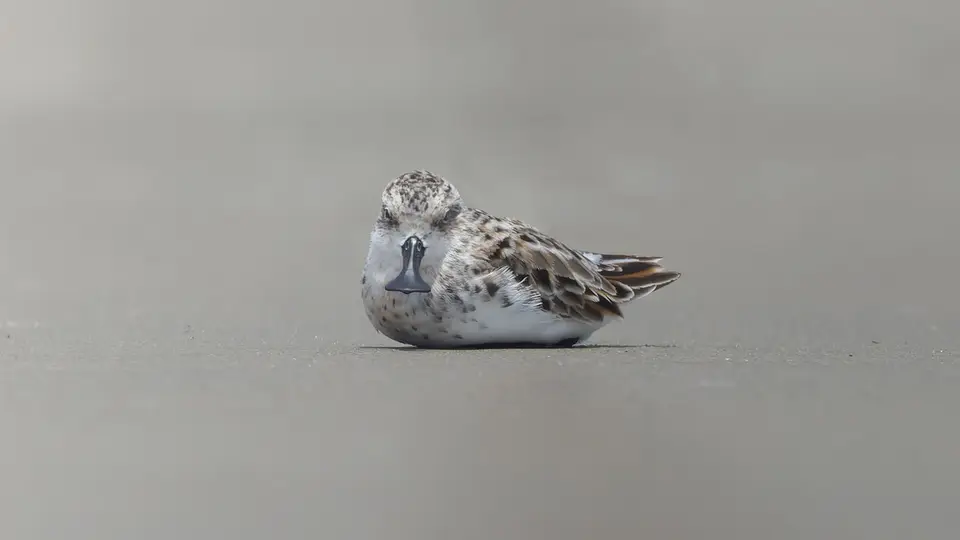
The Chinese crested tern: bringing a "mythical bird" back from the brink
Once thought extinct, the Chinese crested tern survives in a tiny population breeding on islands off eastern China and nearby. Since 2013, a restoration project using decoys and recorded calls has helped it recover.
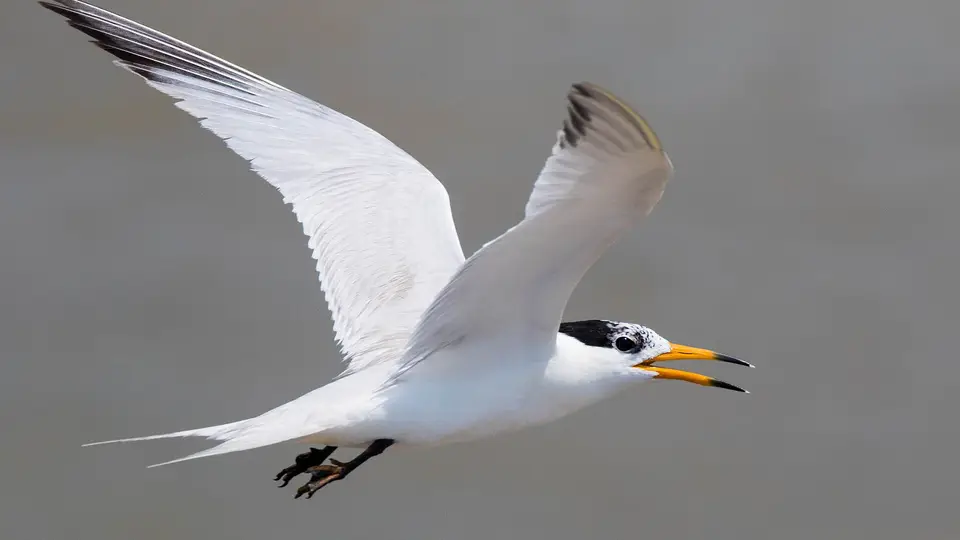
The Chinese crested tern (Thalasseus bernsteini) is one of the rarest seabirds in the world. For more than six decades it was not reliably seen at all, which is why it is often nicknamed the "mythical bird" (神话之鸟) in Chinese. Today a small population breeds on a handful of islands off the coast of eastern China and nearby, and a long-running restoration project has helped it grow. Its story shows both how fragile a species can become and what patient, cooperative conservation can achieve.
Meet the bird
Terns are slender seabirds related to gulls. They catch small fish by diving into the sea. The Chinese crested tern has pale grey upperparts, white underparts and, in the breeding season, a shaggy black crest. Its yellow bill has a dark tip, which helps distinguish it from its much more common relative, the greater crested tern (Thalasseus bergii), whose bill is entirely yellow and whose upperparts are a darker grey.
The two species usually nest together. Chinese crested terns are typically found as a few pairs inside large colonies of greater crested terns on small, uninhabited, rocky islets. They usually lay a single egg. Researchers studying colonies in Zhejiang Province found that birds arrived in late May and left in late August, after raising their chicks on small schooling fish caught near the breeding islands.
Outside the breeding season, the species is thought to winter further south in Southeast Asia, but its migration routes are still poorly known. Like many coastal birds, it is part of the wider East Asian–Australasian Flyway; see our article on the migratory bird flyway.
Lost and found
The species was described by scientists in 1863. In 1937, 21 specimens were collected from islands near Qingdao in Shandong Province. After that, there were no confirmed records for 63 years, and many feared it was extinct.
In June 2000, four breeding pairs were discovered within a greater crested tern colony in the Matsu Islands, off the coast of Fujian. Then, in August 2004, another small breeding group was found in the Jiushan Islands off Zhejiang. In 2008, birds were recorded breeding in the Wuzhishan Islands, part of the Zhoushan archipelago further north. At that time the global population was estimated at no more than 50 birds.
The species is assessed as Critically Endangered on the IUCN Red List, the highest category of threat before extinction in the wild. Our explainer on the IUCN Red List describes what these categories mean.
Why so rare? The main threats
Egg collecting
The most serious immediate threat has been illegal egg harvesting. Some local fishermen have illegally collected seabird eggs on remote islands, and landing on breeding islands also disturbs nesting birds. A colony in the Jiushan Islands was abandoned in 2007 after eggs were taken, and earlier reports describe colonies shifting between islands after egg collection.
Typhoons
Terns nest on low, exposed islets during the summer, when typhoons are frequent along the coast of eastern China. Storms can wash away eggs and chicks or cause whole colonies to abandon their nests. A study of colonies in the Matsu Islands found that colonies which moved during the season were pushed later into the July–August typhoon period, and that typhoons contributed to a significant decline in breeding success. Research in Zhejiang has linked a substantial share of breeding failures to the combined effects of egg harvesting and typhoons.
Hybridization
Because Chinese crested terns are so few and nest among thousands of greater crested terns, some pair with the more common species. Birds that look intermediate between the two have been seen, and a 2018 genetic study published in the journal Ibis confirmed that hybridization occurs. With so few individuals, interbreeding could gradually erode the species' distinct genetic identity.
Other pressures
Researchers also list entanglement in fishing gear, reduced fish supplies, pollution, and disturbance or predation linked to people and introduced animals.
Restoration by "social attraction"
Terns prefer to nest where other terns are already nesting. Conservationists can use this behavior through a technique called social attraction: placing life-size decoys of birds on a suitable island and playing recordings of colony calls, so that passing birds believe the site is already occupied and safe. The technique has been used in more than a hundred seabird restoration projects worldwide since the 1970s.
In 2013, a team led by the Zhejiang Museum of Natural History, working with Oregon State University in the United States and with partners in Taiwan and Japan, began a restoration project on Tiedun Dao, an uninhabited islet of about 2.6 hectares in the Jiushan Islands National Nature Reserve. Tern decoys and solar-powered sound systems were set out before the breeding season. The plan was to attract greater crested terns first, in the hope that Chinese crested terns would follow.
It worked. Large numbers of greater crested terns settled on the island in the first season, and Chinese crested terns joined them. In 2015, a second restoration site was set up on Yaqueshan, a small island of about one hectare in the Wuzhishan Islands, to stabilize the colony there.
According to the team's 2020 paper in Biological Conservation, in 2018 the two restored colonies held 77 breeding adult Chinese crested terns, about 88.5 percent of all known breeding adults that year, and produced 25 fledged chicks, about 96 percent of the known total. These counts confirmed for the first time that the global population had grown to more than 100 birds. Oregon State University described the project as the first major seabird conservation effort in the People's Republic of China.
Where the terns breed today
By the late 2010s, breeding had been confirmed at five areas: the Jiushan and Wuzhishan islands off Zhejiang, the Matsu and Penghu islands in the Taiwan Strait, and an island in Yeonggwang County off the southwest coast of the Republic of Korea, where breeding was discovered in 2016. The Jiushan and Wuzhishan colonies, supported by the restoration work, hold most of the known breeding birds.
What still needs to be done
Even with recent growth, the population is tiny, and one bad typhoon season or a single disturbance event can wipe out much of a year's breeding. Conservationists stress the need to:
- continue guarding colonies and preventing egg collecting;
- monitor hybridization and the genetic health of the population;
- learn more about migration routes and wintering areas, and protect them;
- reduce bycatch and keep fish stocks healthy;
- maintain cooperation among researchers and authorities in mainland China, Taiwan, the Republic of Korea and beyond.
Protected areas along the coast, discussed in our article on national parks and protected areas, and healthy coastal ecosystems such as the Yellow Sea tidal flats are part of the bigger picture.
How you can help
- Never land on or approach seabird colonies during the breeding season. Disturbance can make adults leave their eggs exposed to heat and predators. Follow the advice in our guide to ethical wildlife observation.
- Do not buy or eat seabird eggs.
- Share sightings responsibly. If you see or photograph a Chinese crested tern, share the record with local birdwatching groups or researchers, but avoid publishing exact nest locations.
References
- Lu, Y. et al., "Creating a conservation network: Restoration of the critically endangered Chinese crested tern using social attraction", Biological Conservation 248, 108694, 2020. https://doi.org/10.1016/j.biocon.2020.108694
- ScienceDaily (Oregon State University release), "Saving critically endangered seabird", 2020. https://www.sciencedaily.com/releases/2020/07/200721084201.htm
- Chen, S.H., Fan, Z.Y., Chen, C.S. and Lu, Y.W., "The breeding biology of Chinese Crested Terns in mixed species colonies in eastern China", Bird Conservation International 21, 2011. https://doi.org/10.1017/S0959270910000547
- Hung, C.-H., Chang, L.-N., Chiang, K.-K. and Yuan, H.-W., "Trends in numbers of the Critically Endangered Chinese Crested Tern Thalasseus bernsteini and sympatrically nesting Greater Crested Tern T. bergii in the Matsu Archipelago, Taiwan", Bird Conservation International 29, 2019. https://doi.org/10.1017/S0959270918000369
- Yang, J. et al., "Genetic evidence of hybridization of the world's most endangered tern, the Chinese Crested Tern Thalasseus bernsteini", Ibis, 2018. https://doi.org/10.1111/ibi.12616
- BirdLife International, "Chinese Crested Tern Thalasseus bernsteini" species factsheet. https://datazone.birdlife.org/species/factsheet/chinese-crested-tern-thalasseus-bernsteini