Green Eyes (绿眼睛): a profile of a Wenzhou youth conservation group
How a student club in Cangnan County, Wenzhou, became a regional conservation group known for market monitoring, wildlife rescue and youth education — based on independent sources.
In the 2000s, international writers covering China's young environmental movement kept returning to one small organization from Wenzhou, on the coast of Zhejiang Province: Green Eyes (绿眼睛环境组织). It had been started by teenagers, it focused on the very local problem of wild animals sold in markets and restaurants, and it put school and university students at the centre of its work.
This address once hosted the English section of Green Eyes' website, where the group republished foreign press coverage about itself. That section no longer exists. This page replaces it with an independent profile drawn from sources that readers can check. It is not written by, approved by or affiliated with the organization.
Origins: a student club in Cangnan
According to a 2006 article by Daniela Salaverry of Pacific Environment, published in the Woodrow Wilson International Center's China Environment Series, Green Eyes grew out of a club formed by school students in Cangnan County, part of Wenzhou, led by Fang Minghe (方明和). Disturbed by what they learned about wildlife poaching and trade, the students began by collecting and discussing newspaper stories about the local environment. In 2000, while Fang was still in high school, the club was registered as an organization.
A 2011 profile of Fang published by the Narada Foundation (南都公益基金会), a Chinese charitable foundation that supported him through its "Ginkgo Partner" fellowship for young nonprofit leaders, likewise gives 2000 as the founding year and describes Green Eyes as based in Zhejiang with pilot projects in Fujian, Guangdong, Hainan and Liaoning.
What the organization did
Watching the markets
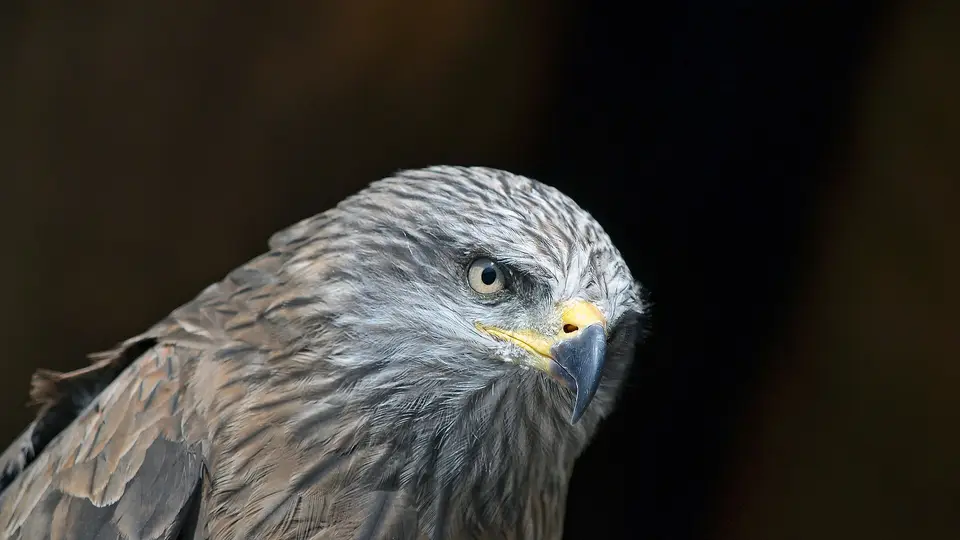
The work that attracted most outside attention was monitoring the wildlife trade. The Wilson Center article describes undercover investigations of vendors illegally selling protected species, carried out in cooperation with law enforcement. A BBC News report from December 2006 described members heading out early in the morning to film market stalls, recording frogs, snakes, owls and eagles offered for sale. The same report emphasized Fang's view that children have a right to take part in protecting the environment.
For context on why this mattered — and why the trade is so difficult to stop — see our explainer on the illegal wildlife trade and on China's Wildlife Protection Law.
Rescuing animals
Green Eyes ran a small wildlife rescue and rehabilitation station. In 2006 the Wilson Center article described it as modest — a handful of cages; a profile by the same author, republished on the organization's English pages in 2010, says the local forestry bureau helped fund it. Archived pages from the organization's website, and local newspaper reports it reposted, describe raptors, herons, wild mammals and confiscated or surrendered reptiles being brought to the station. We summarize that record in Wildlife rescue in Wenzhou.
Educating young people
From the start, the organization's identity was tied to students. The 2006 article describes environmental education programs for local middle and high schools, summer camps with field trips, and work with university student green groups in Wenzhou. Those themes — learning outdoors and giving young people real roles — are the subject of our Environmental Education section, for example youth environmental participation.
Growth and regional projects
By 2006 the organization had, according to the Wilson Center article, three full-time staff, five offices and hundreds of volunteers, and had received small grants from the Global Greengrants Fund. Its own "About us" page, archived in 2009, says it launched national projects in 2006 and in 2008 set up two southern projects: the South China Nature Society (华南自然会) in Guangzhou and the Hainan Environment Volunteer Center in Haikou. The same page lists program areas including wildlife protection, water-environment protection in the Aojiang River basin in Zhejiang and on the Pearl River in Guangzhou, Hainan's tropical rainforest, marine ecology, environment and health, and community environmental governance. We describe two of these in Hainan rainforest and gibbon work and the Aojiang River water project.
Figures the organization published about itself — for example, the number of animals rescued — are self-reported, and we do not repeat them as established facts.
Press coverage in English
International interest peaked around 2006–2012. Our guide to English-language coverage lists the main articles and where to find them. In July 2012, for example, the French newspaper 20 Minutes linked to this page, crediting "Green Eye de Chine", in a report on Chinese police rescuing some 3,600 crocodiles from the illegal meat trade.
After 2016
Copies of the website in the Internet Archive end in early 2016, after which the domain lapsed and was later used for unrelated content. We have not found a reliable public source describing what happened to the organization afterwards, so we do not speculate. If you have first-hand knowledge, we would welcome a correction or addition.
References
- Daniela Salaverry, "Green Eyes: Taking Action to Halt Illegal Wildlife Trade", China Environment Series 8, Woodrow Wilson International Center for Scholars, 2006, p. 150. https://www.files.ethz.ch/isn/138723/CEF_08.pdf
- BBC News, "China's 'Green Eyes' focus on protection", 5 December 2006. http://news.bbc.co.uk/2/hi/asia-pacific/6157451.stm (summary repost: https://chinadigitaltimes.net/2006/12/chinas-green-eyes-focus-on-protection-bbc/)
- Narada Foundation (南都公益基金会), Ginkgo Partner profile of 方明和, 2011 (Internet Archive copy). http://web.archive.org/web/20150506031044/http://www.naradafoundation.org/content/1668
- Green Eyes website, "关于我们" (About us), 8 June 2009 (Internet Archive copy). http://web.archive.org/web/20100225123518/http://www.greeneyeschina.org/gywm/qg/2009-06-08/116.html
- Internet Archive, captures of greeneyeschina.org, 2006–2016. https://web.archive.org/web/2016*/greeneyeschina.org